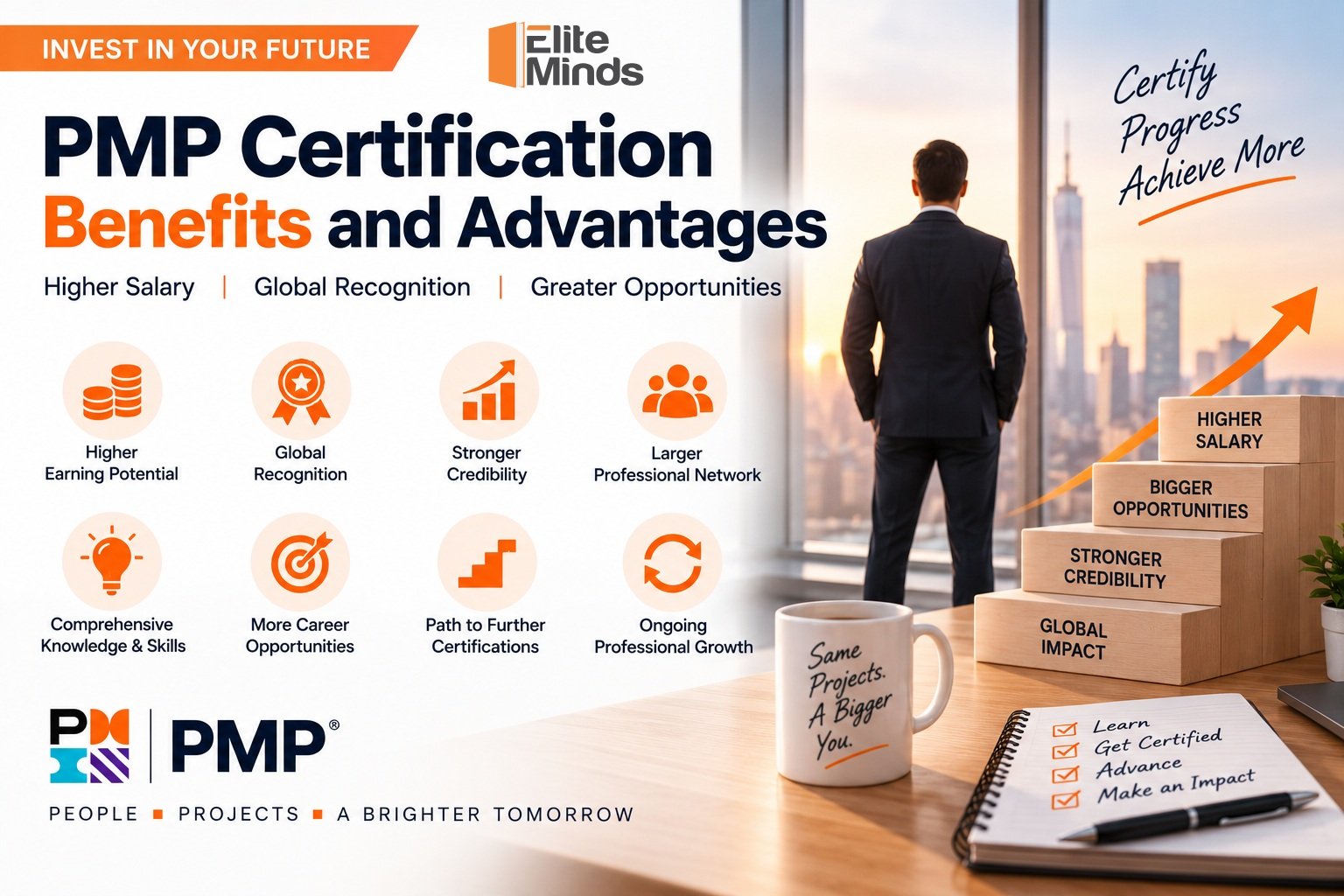
The PMP raises your earning potential, strengthens your professional credibility, widens your career options, connects you to a global community, and commits you to ongoing development. PMI's most recent salary survey found that PMP holders earn a 17% higher median salary than non-certified peers, and 24% higher in the United States.
In a competitive business environment, strong project management practices application is what turns strategy into results. The Project Management Professional (PMP) certification, awarded by the Project Management Institute (PMI), is the credential that proves you can do exactly that. It validates your ability to lead and deliver complex projects, and it is recognized by employers around the world. This article walks through the main PMP certification benefits and why the credential is worth the effort.
Why pursue the PMP certification?
Earning the PMP signals a serious commitment to the profession and a solid grasp of project management best practices. It sets you apart from other candidates, and in many organizations it has become a hiring prerequisite rather than a nice-to-have. Whatever your industry, the credential gives you a shared language and framework that travels anywhere in the world.
The main PMP certification benefits
1. Enhanced professional credibility
One of the clearest advantages of PMP is the immediate lift in professional credibility. The credential is recognized and respected worldwide, and holding it shows employers and colleagues that you meet a high standard of competence and ethical conduct. That distinguishes you from your peers and positions you as someone who can be trusted to deliver complex projects.
2. Comprehensive knowledge and skills
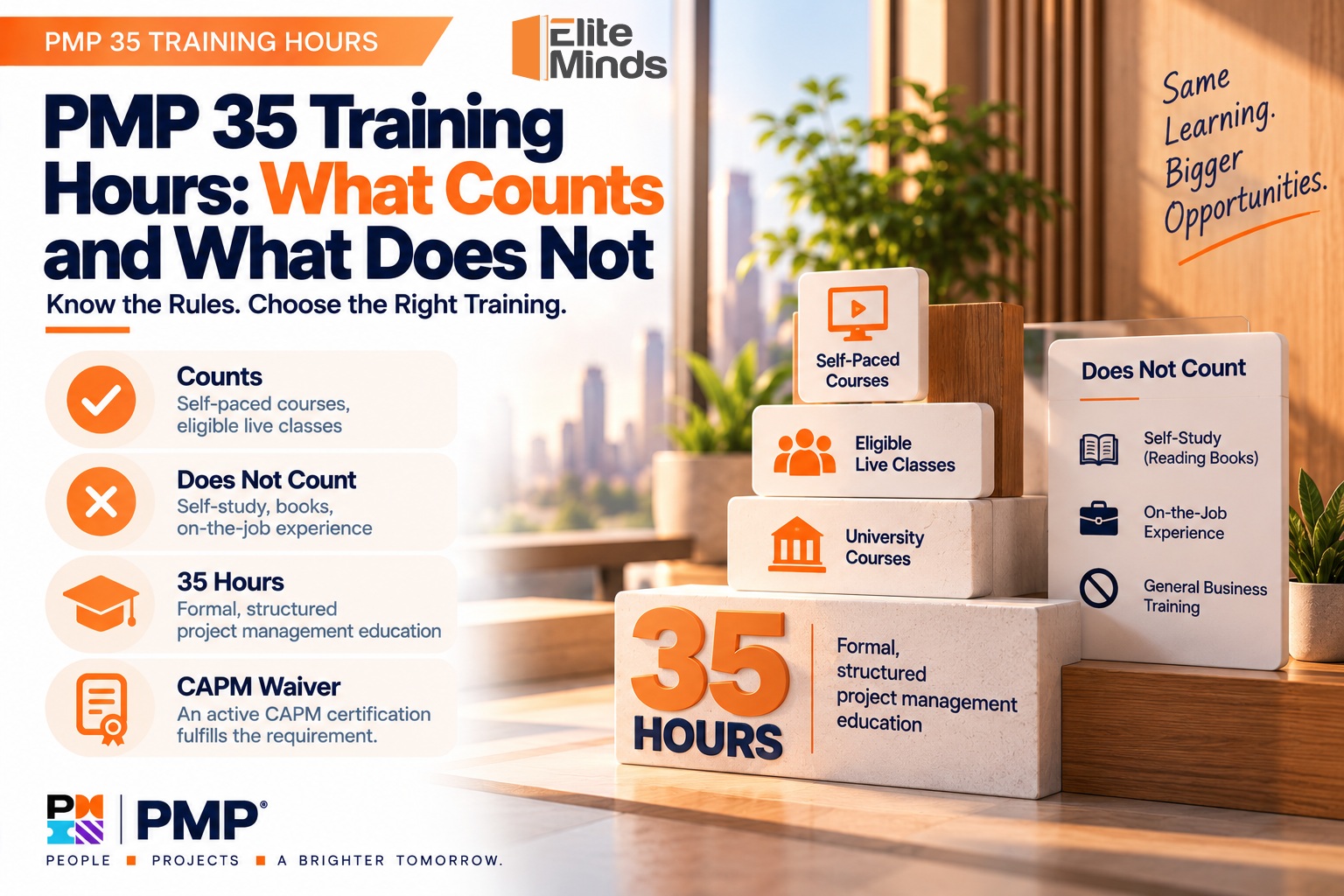
Preparing for the exam, including the 35 hours of training and the exam itself, gives you a thorough grounding in project management best practices, tools, methods, and artifacts. You come away able to initiate, plan, execute, monitor, and close projects with confidence. The PMP course benefits go beyond the exam, but the most immediate one is that a good course prepares you fully for certification. You can see how our PMP exam prep course is structured through the link.
3. Higher earning potential
The financial return is one of the most cited PMP certification benefits. According to PMI's Earning Power: Project Management Salary Survey (14th edition, 2025), PMP holders report a 17% higher median salary than non-certified professionals across the 21 countries surveyed, and in the United States the gap is 24%. The exact premium varies by country, industry, and experience, but the direction is consistent, and certification pays off over a career.
4. Stronger marketability
The PMP makes your resume stand out. Employers across industries value the credential as a signal of proven project management ability, and in a competitive market it often moves your application to the top of the pile.
5. A larger professional network
Becoming PMP certified brings you into the PMI community, a large and welcoming network of project professionals. Through PMI events, webinars, and forums you can connect with industry leaders, learn from peers, and stay current with emerging practice. That network supports your growth long after you pass the exam, and it is a real part of the PMP certification value.
6. A foundation for further certifications
The PMP is often a starting point rather than a finish line. Because it covers a broad base of project management practice, it prepares you to pursue more specialized credentials later, such as the PMI Risk Management Professional (PMI-RMP) or the PMI Scheduling Professional (PMI-SP).
7. Continuous professional development
The value of the PMP continues after you earn it. To keep the certification active, you renew every three years by earning 60 Professional Development Units (PDUs) through continuing education and community involvement. That requirement keeps your skills current as the field evolves, which is a benefit in itself.
8. Personal satisfaction
Finally, do not underestimate the personal reward. After earning eight PMI certifications myself, the sense of accomplishment that comes from the hard work behind each one has been one of the most meaningful parts of the journey.
Am I eligible for the PMP?
Wondering whether you qualify? Broadly, you need a four-year degree with 36 months of leading projects, or a high school diploma with 60 months, plus 35 contact hours of training. Our PMP eligibility requirements guide covers the full criteria and the education tiers.
Frequently asked questions
For most experienced project managers, yes. It raises earning potential, credibility, and career options, and PMI's latest survey shows a 17% median salary premium.
PMI's 14th-edition salary survey reports 17% higher median pay globally and 24% higher in the United States, though this varies by country and industry.
Renew every three years by earning 60 PDUs through continuing education and involvement in the project management community.
Higher earning potential, global recognition, stronger credibility, a wider professional network, and a foundation for further certifications.
Yes. The credential gives you a common project management language and framework that applies across industries and countries.