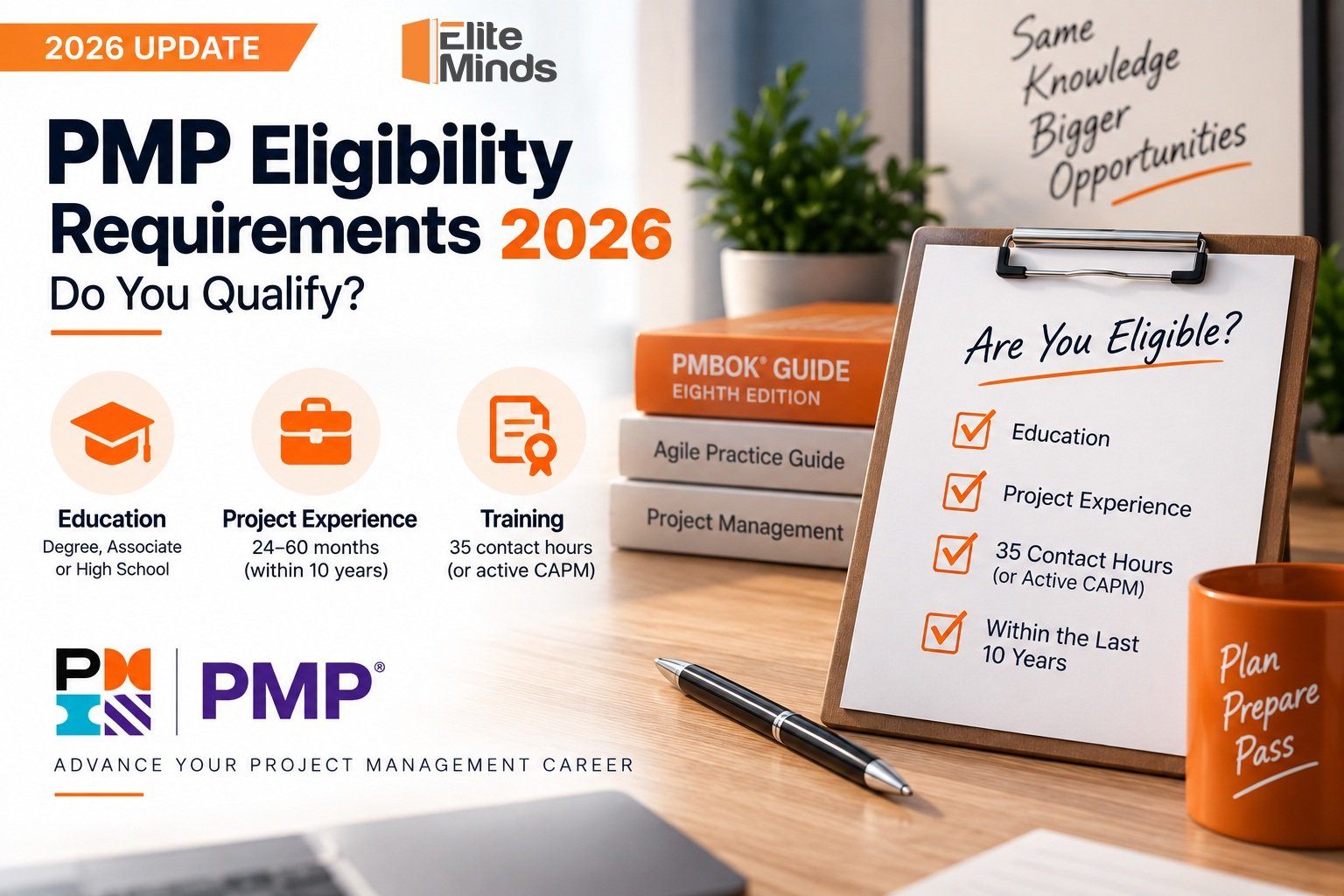
To sit the PMP exam you need a mix of education, project experience, and formal training. As common examples, a four-year degree with 36 months of leading projects, or a high school diploma with 60 months, plus 35 contact hours of project management education training. All of your experience must fall within the last 10 years, and an active CAPM certification waives the 35-hour training requirement. This guide explains each requirement, the different education tiers, and how to apply for the PMP exam.
The PMP exam content changed on July 9, 2026, but PMI has confirmed that eligibility itself was not the main focus of that update. For what the new exam tests, see our PMP Exam Content Outline (ECO) 2026 guide and PMP exam format 2026 guide.
What is the PMP certification?
The Project Management Professional (PMP) is PMI's flagship certification, and it recognizes people who have shown they can lead projects and manage the people, processes, and business priorities involved. To earn it, you meet PMI's PMP exam qualifications and then pass the 180-question exam, which is written by project managers around real project situations.
What languages is the PMP exam offered in?
The exam is available in many languages, including Arabic, English, and a range of others. PMI updates this list from time to time, so check the current options on PMI.org before you book your exam.
PMP exam eligibility requirements
The PMP eligibility criteria fall into three parts: your education, your project experience, and your formal project management training. How much experience you need depends on your level of education, as shown below.
| Education | Experience (within the last 10 years) | Training |
|---|---|---|
| Four-year (bachelor's) degree or global equivalent | 36 months leading projects | 35 contact hours, or an active CAPM |
| Associate's degree or EQF Level 5 (verify) | 48 months leading projects | 35 contact hours, or an active CAPM |
| High school diploma or global equivalent | 60 months leading projects | 35 contact hours, or an active CAPM |
| Degree from a GAC-accredited program | 24 months leading projects | 35 contact hours, or an active CAPM |
The 10-year window is that all of the experience you claim must have been earned within the last 10 years. PMI recently widened this from 8 years, so older project work can now count toward the total.
Beyond the number of months, your experience has to meet three conditions:
- Unique and non-overlapping. If you ran two projects at the same time, you count that period once, not twice. Six months on Project A and six months on Project B in the same window is six months of experience, not twelve.
- Leading projects. Your experience needs to involve leading and directing the work toward outcomes, such as managing scope, schedule, and resources, and engaging stakeholders, rather than only taking part in tasks.
- Paid and professional. The experience must come from paid, professional roles in a real organization. Volunteer work, internships, and academic projects do not count.
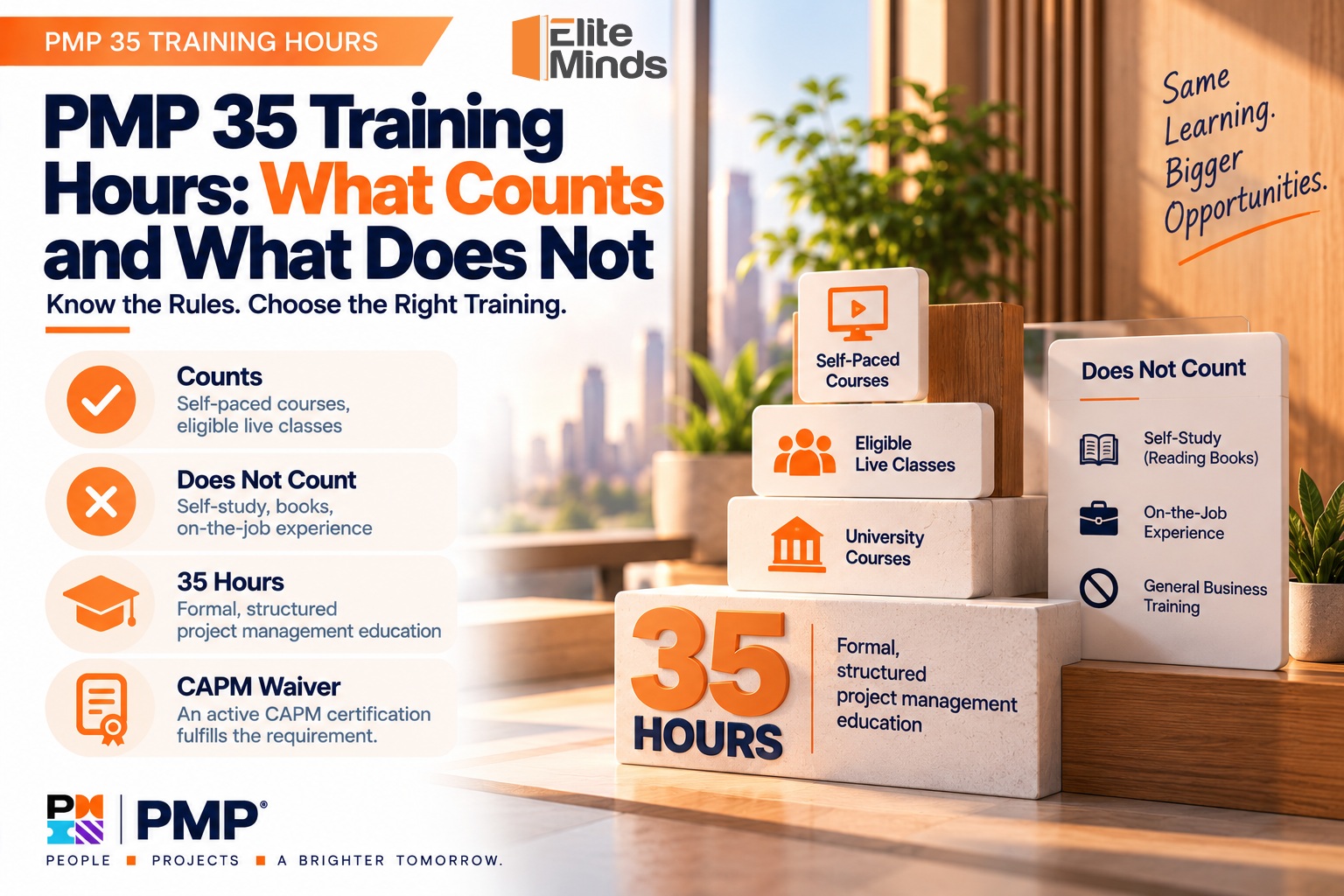
When it comes to the training requirement, you also need 35 contact hours of formal project management education. You can build these up across several courses, and they can come from classroom training, online courses, university programs, or a PMI Authorized Training Partner (ATP). If you already hold an active CAPM certification, this 35-hour requirement is waived.
How to apply for the PMP exam
Once you are confident you meet the requirements, you document your qualifications through your PMI account and start the application. This usually involves:
- Providing your education details, including the degrees you hold and where you earned them.
- Recording your project experience, including project names, your role and responsibilities, and the start and end dates for each project.
- Uploading proof of your 35 contact hours of project management education, or evidence of an active CAPM certification.
PMI reviews your application to confirm you meet the requirements. Some applications are selected at random for an audit, where you supply proof of education, signed verification of your experience from a supervisor or sponsor, and your training certificate. An audit is routine, so accurate records make it straightforward. Once your application is approved, you can schedule and sit the exam.
Preparing for the exam
Meeting the requirements is only the first step. To pass, you also need to prepare for the content of the 2026 PMP exam.
- Study a current, PMBOK 8-aligned resource. Our PMP syllabus overview covers what to study for the 2026 exam.
- Take a structured prep course that includes the 35 contact hours. Our PMP exam prep course is self-paced with instructor support.
- Practice with a simulator. Our PMP exam simulator includes eight full-length tests of 180 questions, each timed to 240 minutes (4 hours) to match the real exam.
- Build a study plan around your timeline. See our PMP study plan.
Frequently asked questions
Anyone who meets one of PMI's education-and-experience tiers, for example a four-year degree plus 36 months of leading projects, or a high school diploma plus 60 months, and completes 35 contact hours of training or holds an active CAPM.
Within the last 10 years. PMI recently widened this from 8 years.
No. With a high school diploma or associate degree you can still qualify by meeting the higher experience requirement.
Yes. An active CAPM certification waives the 35 contact hours of training.
No. The experience must come from paid, professional roles in a real organization.