PMI does not publish a PMP exam passing score or an official PMP exam pass rate. There is no fixed percentage you need to reach, such as 61% or 70%. Instead, PMI uses expert analysis to set the standard a qualified project manager should meet, and your result is reported as a performance rating, not a number. Any exact passing score or pass rate you see online is an estimate, and it is not officially published by PMI.
This guide explains how the exam is scored, what the ratings on your score report mean, and what score to aim for in practice so you can book the exam with confidence.
Is there a PMP exam passing score?
Not one that PMI shares. PMI sets the passing standard through a process called psychometric analysis: experienced project managers review the questions and decide how many a minimally qualified candidate should answer correctly. PMI then uses that standard to decide whether each candidate passes.
The key point is this: you are measured against a standard of competence, not against the other people who took the exam on the same day.
Because PMI does not publish the number, you will see many figures online. Treat them as guesses. They are not official, and they cannot tell you exactly how many questions you can afford to miss.
What is the PMP pass rate?
PMI does not publish an official PMP pass rate either. Figures you find online usually come from training providers, surveys, or forum discussions, and they vary widely.
A pass rate also says little about your own chances. What matters is whether you are ready, and the best way to judge that is your score on full, timed practice exams. More on that below.
How is the PMP exam scored?
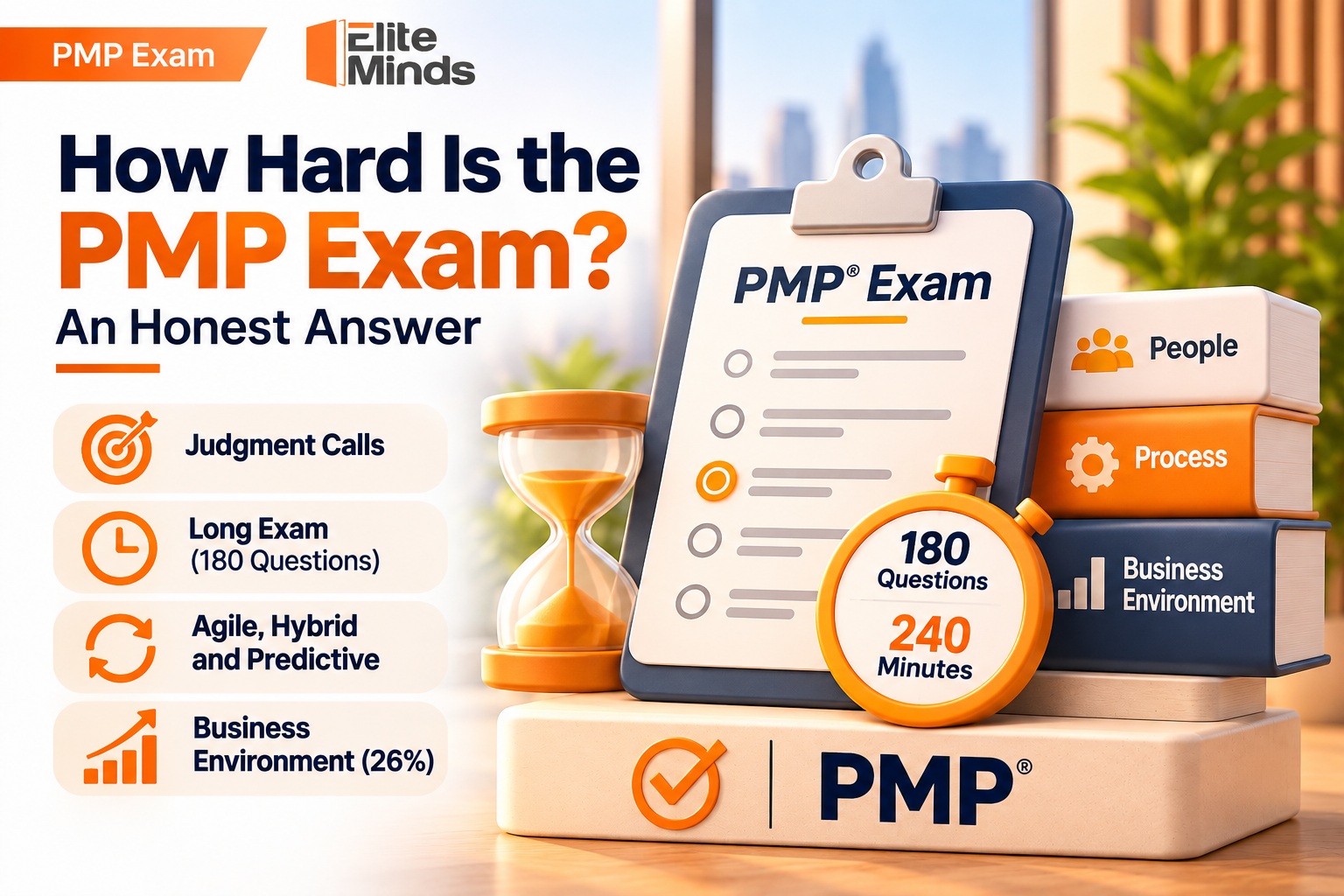
The exam has 180 questions, but only 170 count toward your result. The other 10 are pretest questions that PMI is trying out for future exams. They are mixed in at random and look exactly like the scored ones, so treat every question as if it counts.
A few more things to know:
- There is no penalty for a wrong answer. A blank answer and a wrong answer both score zero, so never leave a question empty.
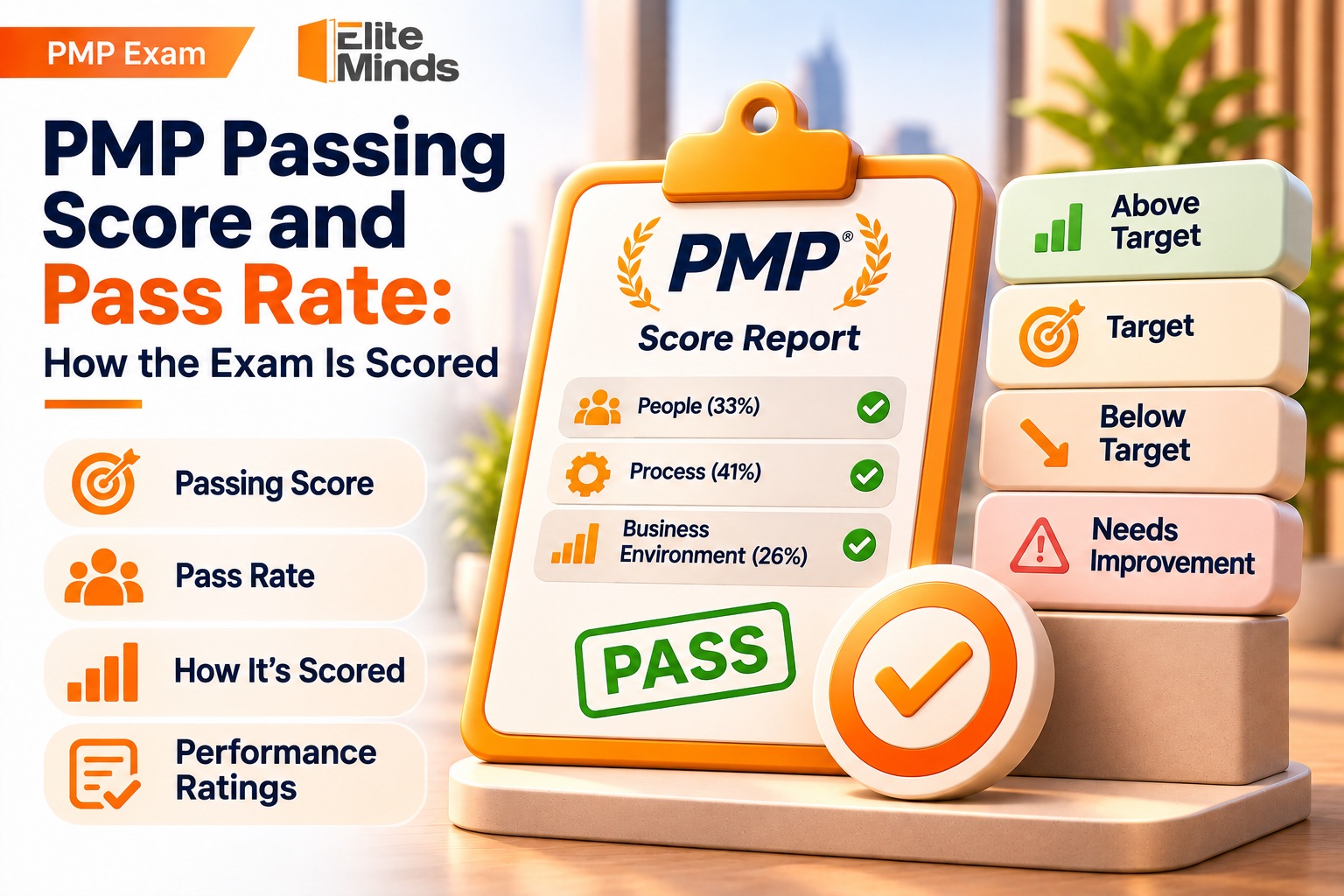
- Every scored question carries weight. Your result depends on your overall performance across the three domains: People (33%), Process (41%), and Business Environment (26%).
- Questions with several parts, such as multiple response or drag and drop, are part of the same scoring process. Read the instructions carefully and select exactly the number of answers asked for.
For the full exam structure, including time and breaks, see our PMP Exam Format guide.
The four performance ratings
Your score report does not show a percentage. It shows performance ratings, one for the exam overall and one for each domain.
| Rating | What it means |
|---|---|
| Above Target | Your performance is better than the standard a qualified candidate is expected to meet |
| Target | Your performance meets the standard |
| Below Target | Your performance is slightly below the standard |
| Needs Improvement | Your performance is well below the standard |
Your overall rating decides whether you pass. An overall rating of Target or Above Target is a pass. Below Target or Needs Improvement is a fail. The domain ratings show where you were strong and where you were weak.
A common question is whether you can pass with a Below Target rating in one domain. Yes, you can. The overall result depends on your performance across the whole exam, so a strong result in some domains can balance a weaker result in another.
Reading your PMP score report
When you finish the exam, you complete a short survey and then see whether you passed. Your full score report, with the rating for each domain, is available in your PMI account.
Use the domain ratings as a guide:
- If you passed, the ratings show your strengths and the areas worth developing in your work.
- If you did not pass, the ratings show where to focus before your next attempt. A Needs Improvement domain is your first priority, then any Below Target domain.
What score should you aim for in practice?
Since PMI does not publish a passing score, use your practice results as your guide. A simple rule many instructors use, and the one I give my own students:
Book the real exam when you score about 80% or more on full, timed practice exams, more than once.
Why 80%, and not lower? Practice exams vary in difficulty, and exam-day pressure usually lowers your score a little. Aiming for about 80% gives you a safe margin. Check three things together:
- Your overall score is about 80% or more on at least two full exams.
- You finish all 180 questions within 240 minutes.
- No single domain is far below the others.
A score from a short quiz does not count. Only a full 180-question exam under real timing shows whether you can keep your performance for four hours.
If you do not pass
Not passing on the first attempt is more common than people admit, and it is not the end of the road.
- You can take the exam up to three times within your one-year eligibility period. Each retake costs less than the first attempt. See our PMP Exam Cost guide for retake fees.
- Start with your score report. Focus first on any domain rated Needs Improvement, then Below Target.
- Change how you practice, not only how much. Read every explanation, and take full timed exams until you reach about 80% consistently.
- Book the retake when you are ready, not straight away. Your eligibility year gives you time to prepare properly.
If you want to understand why candidates find the exam difficult, read How Hard Is the PMP Exam?
Your next step
The quickest way to see where you stand is to take a full timed exam. Our free PMP practice test has 180 questions, follows the real timing, and gives you feedback on your performance, so you can see which areas need work.
For eight full mock exams and the 35 training hours, see our PMP Exam Preparation Course.
Frequently asked questions
PMI does not publish one. The passing standard is set through psychometric analysis by experienced project managers, and results are reported as performance ratings rather than a percentage.
PMI does not publish an official pass rate. Figures online are estimates from third parties and vary widely.
There is no published number. As a practical target, aim for about 80% on full, timed practice exams before you book.
It means your performance was better than the standard a qualified candidate is expected to meet. Target means you met the standard.
Yes. Your overall result depends on your performance across the whole exam, so a weaker domain can be balanced by stronger ones.
No. The 10 pretest questions do not count, but you cannot tell which ones they are, so answer every question carefully.
No. A wrong answer scores the same as a blank one, so always choose an answer.
Twice. You can take the exam up to three times in total within your one-year eligibility period: your first attempt and two retakes.