PMP stands for Project Management Professional. It is a certification from the Project Management Institute (PMI) that shows you can lead projects, not only take part in them. To earn it, you need experience leading projects, 35 hours of project management education, and a pass in a 180-question exam built around real project situations. It is recognized by employers in almost every industry and country.
If you have just heard about the PMP from a manager, a job advert, or a colleague, this guide gives you the PMP certification explained in plain English: what it is, who it is for, and how people earn it. You do not need any project management background to follow it.
What does PMP mean?
The PMP meaning is simple: PMP is short for Project Management Professional. It is a professional credential that proves a level of skill and experience. It is not a university degree, and you do not need it by law to work as a project manager.
The PMP is issued by the Project Management Institute (PMI), a global, non-profit professional organization for project managers. PMI also publishes the PMBOK Guide, the best-known reference book in the field, and runs several other certifications, such as the CAPM for beginners, the PgMP for program managers, and the PfMP for portfolio managers.
A simple way to think about it: a degree shows what you studied, while the PMP shows that you have actually led projects and can make sound decisions as a project manager.
What does a PMP-certified project manager do?
A project is temporary work with a clear goal, such as launching a product, building a facility, or moving a company to a new system. A project manager leads that work from start to finish.
In practice, that means:
- Agreeing on what the project must deliver and why it matters to the business
- Planning the work, the schedule, and the budget
- Leading the team and working with stakeholders
- Managing risks, issues, and changes
- Delivering the result and confirming it brings the expected value
The PMP tests whether you can do all of this using predictive (plan-based), agile, and hybrid ways of working.
Who is the PMP for?
The PMP is for people who already lead projects or parts of projects. Typical candidates include:
- Project managers and senior project managers
- Project coordinators and team leads who direct project work
- Engineers, IT specialists, and consultants who manage projects as part of their job
- PMO staff and program managers
Your job title does not have to say "project manager." What matters is that you have led and directed project work: planning it, guiding the team, and owning the outcome.
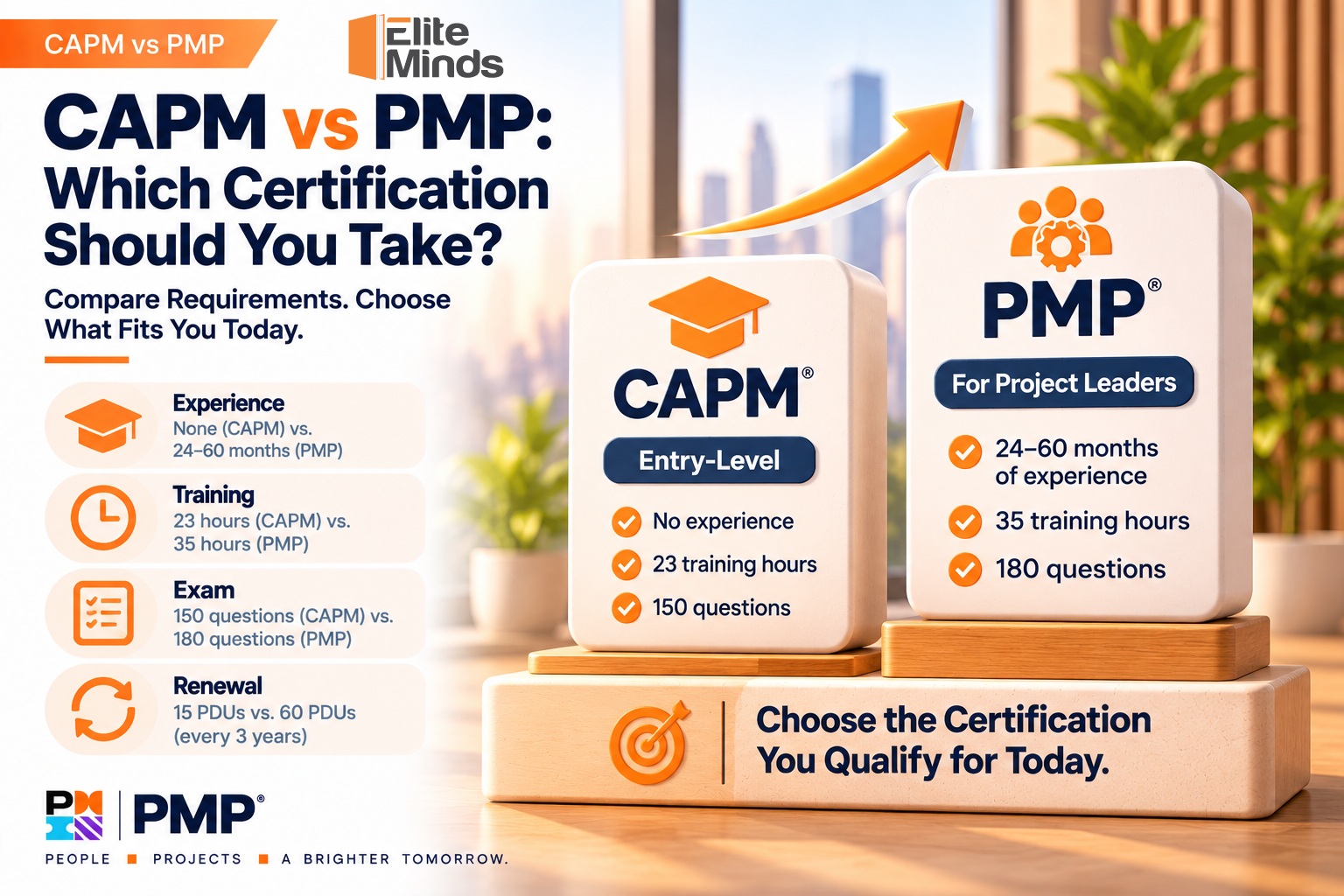
New to project management? If you do not have project experience yet, the PMP is not the right first step. PMI's entry-level certification, the CAPM, needs no experience. Our CAPM vs PMP guide helps you choose.
What does the PMP exam test?
The exam has 180 questions and you have 240 minutes to answer them. Most are situational questions, where they describe a project situation and ask what you should do next. They test your judgment, not your memory.
The questions are grouped into three areas, called domains:
| Domain | Share of the exam | In plain words |
|---|---|---|
| People | 33% | Leading the team and working with stakeholders |
| Process | 41% | Planning and running the project work |
| Business Environment | 26% | Linking the project to strategy, value, and compliance |
About 60% of the questions reflect agile and hybrid ways of working, and about 40% reflect predictive, plan-based approaches. The exam is based on PMI's Examination Content Outline, and the main study reference is the PMBOK Guide, Eighth Edition.
For the full picture, see our PMP Exam Format guide and our PMP Exam Content Outline guide.
How to get PMP certified in five steps
- Check that you are eligible. You need between 24 and 60 months of experience leading projects within the last 10 years, depending on your education. For example, 36 months with a bachelor's degree, or 60 months with a secondary diploma. See our PMP Eligibility Requirements guide for every route.
- Complete 35 hours of project management training. These are called contact hours. A structured course, such as a self-paced online course, counts. Reading a book on your own does not. If you choose a live class, from December 1, 2026 it must come from a PMI-eligible provider. If you hold an active CAPM, you do not need these hours. See PMP 35 Training Hours: What Counts.
- Apply to PMI. You create an account on PMI.org and describe your education, your training, and each project you led. PMI reviews the application, and some applications are selected at random for an audit.
- Pay and schedule your exam. Once PMI approves your application, you pay the exam fee and book a date, either at a test center or online with a remote proctor. You then have one year to pass.
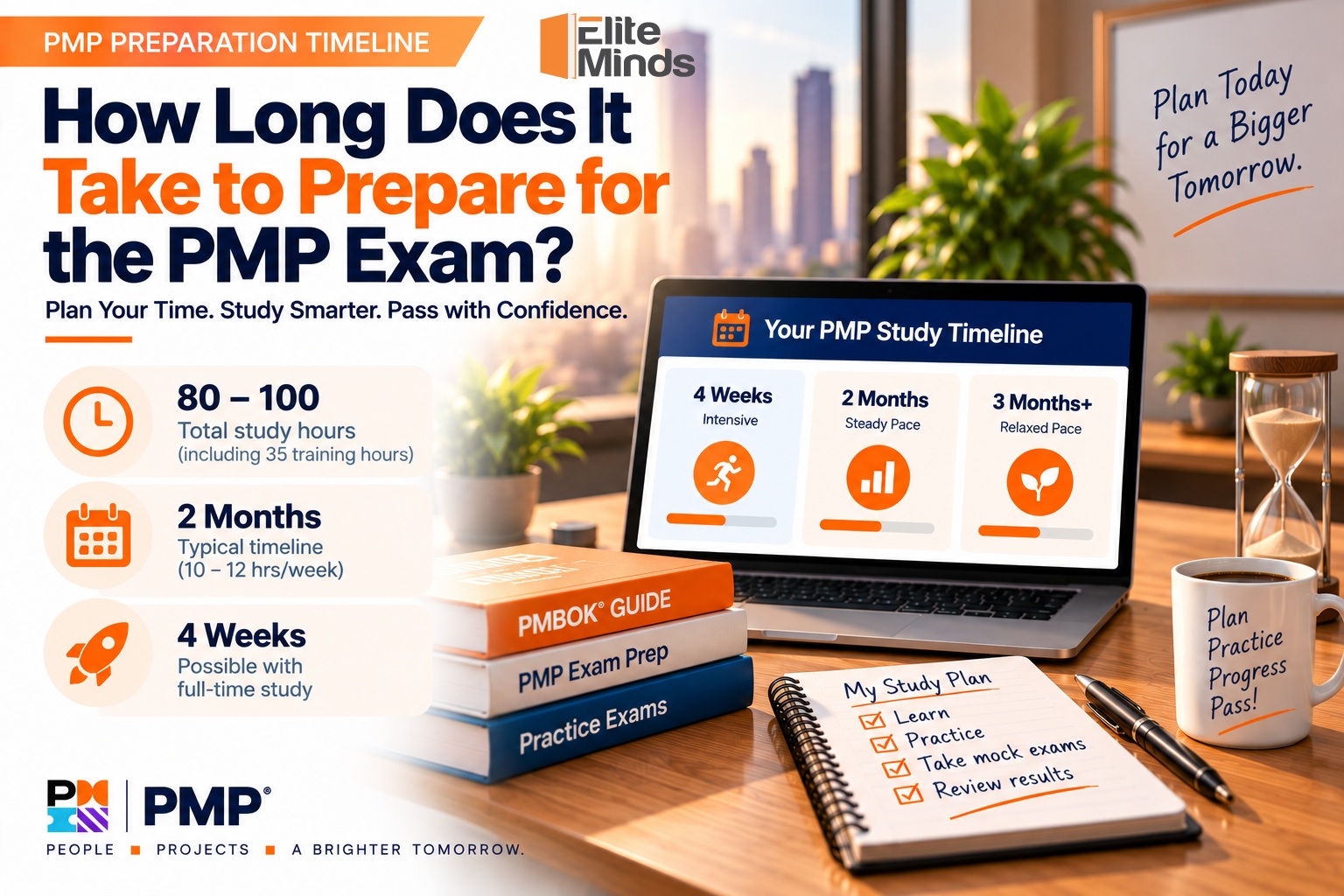
- Prepare and pass the exam. Most candidates need about 80 to 100 hours of preparation in total, including the 35 training hours. Timed practice exams are the best way to know when you are ready. See How Long Does It Take to Prepare for the PMP Exam?
Cost and time at a glance
| Item | Typical figure |
|---|---|
| Exam fee (US) | $445 for PMI members, $675 for non-members |
| PMI membership | About $139 to $164 a year, plus a $10 joining fee |
| Training | 35 contact hours, from any reputable provider |
| Preparation time | About 80 to 100 hours in total |
| Calendar time | About two months at 10 to 12 hours a week |
For most candidates, joining PMI before paying the exam fee costs less overall. Fees change from time to time and differ by country, so check the current figure on PMI.org before you pay. Our PMP Exam Cost guide covers retakes, renewal, and the costs people often miss.
How to keep your PMP
The PMP is valid for three years. To renew it, you earn 60 Professional Development Units (PDUs) in that time, through courses, webinars, reading, and giving back to the profession, and you pay a renewal fee. You do not sit the exam again.
Is the PMP right for you?
Ask yourself three questions:
- Do I lead projects, or want to lead bigger ones? The PMP is built for people who direct project work.
- Do I have enough experience? If you are short of the months you need, start with the CAPM or wait until you qualify.
- Do employers in my field ask for it? Look at job adverts for the roles you want. In many industries and regions, the PMP is listed as required or preferred.
PMI's latest salary survey reports that PMP holders earn a 17% higher median salary than non-certified peers. See our PMP Certification Benefits guide for the full picture.
Your next step
The easiest way to see where you stand is to try a full practice exam. Take our free PMP practice test: 180 questions, timed like the real exam, with feedback on your performance.
When you are ready to prepare properly, our PMP Exam Prep Course includes the 35 training hours, eight full mock exams, and help with your PMI application.
Frequently asked questions
A PMP is a project manager who holds the Project Management Professional certification from PMI. The term is used for both the certification and the person who holds it.
Project Management Professional. It is a certification issued by the Project Management Institute (PMI).
No. It is a professional certification. You earn it by meeting PMI's experience and training requirements and passing an exam.
Yes. With a secondary diploma, you need 60 months of experience leading projects within the last 10 years, plus 35 hours of training.
Not straight away, because the PMP requires project experience. Beginners usually start with the CAPM, which needs no experience.
Most candidates prepare for about two months at 10 to 12 hours a week. Add a few days to a few weeks for PMI to review your application.
Yes. The exam is offered in many languages, including Arabic. Check the current list on PMI.org when you book.
It is valid for three years. You keep it active by earning 60 PDUs and paying the renewal fee.