So, how hard is the PMP exam? Yes, it is hard, but it is hard in a specific way. It does not test how much you can memorize. It tests whether you can make the right decision as a project manager, again and again, for four hours. In my experience, most people who fail do not lack knowledge. They lack practice in reading scenarios the way PMI expects, and in keeping their focus until question 180. Most candidates who fail the exam share the same feedback: Time was not enough.
The good news is that this kind of difficulty can be trained. In my experience coaching candidates, the ones who struggle least are not always the most experienced. They are the ones who practiced under real exam conditions before test day.
Why is the PMP exam so hard?
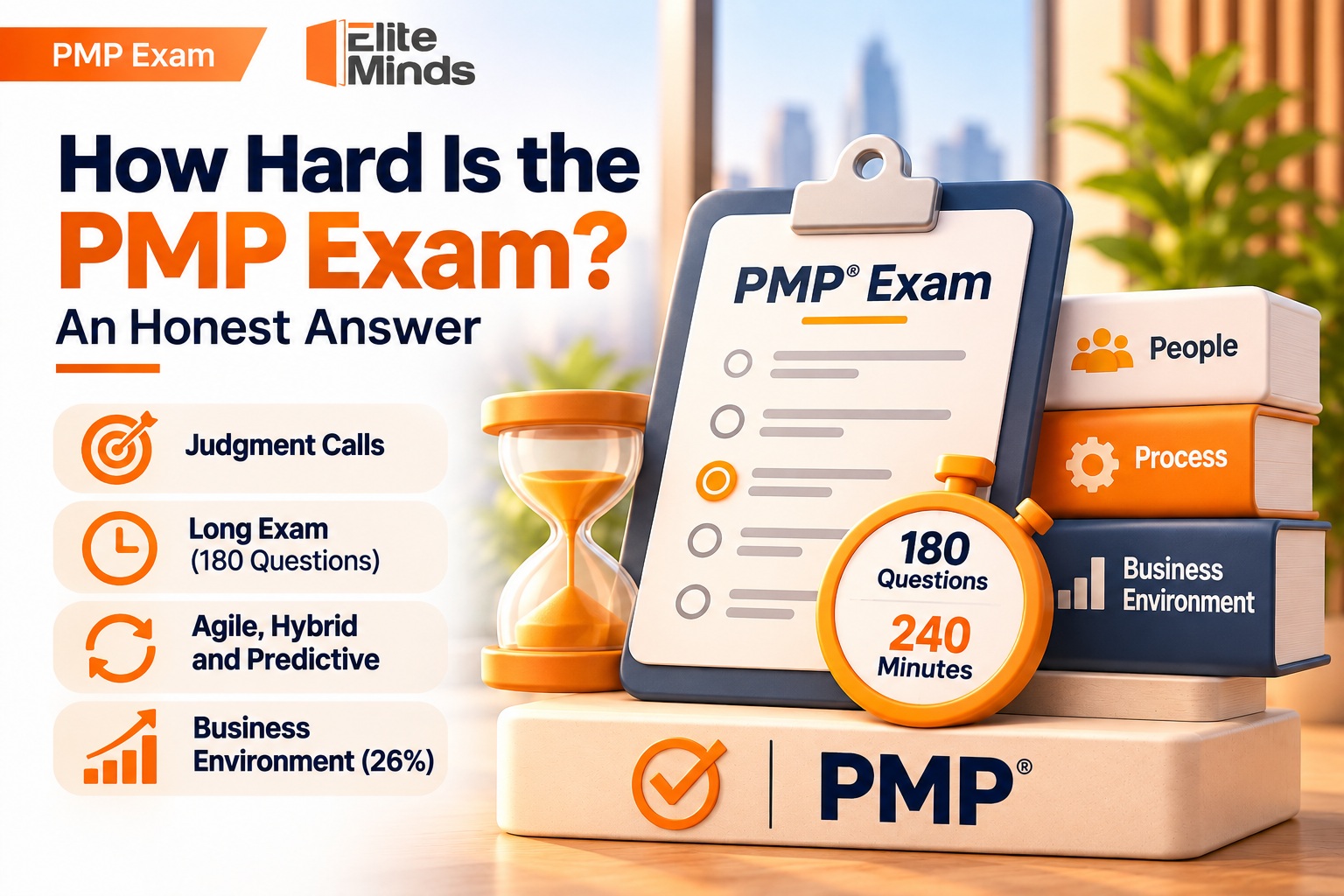
- Almost every question is a judgment call. Most questions describe a project situation and ask what you should do first, next, or best. Often two or three options are reasonable actions. Only one is the best action at that moment. You need to know the concepts and also when to apply them.
- The answer PMI expects is not always what happens at work. In many workplaces, managers escalate quickly, skip change control, or make decisions for the team. The exam rewards a different approach: understand the situation first, support the team, follow the agreed process, and protect the value of the project. Candidates with many years of experience sometimes find this the hardest part, because they answer from habit.
- It is long. You answer 180 questions in 240 minutes, which is about 80 seconds per question. Many questions are long and wordy. Keeping your concentration for four hours is a skill in itself.
- It covers three ways of working. About 60% of the questions reflect agile and hybrid approaches, and about 40% reflect predictive ones. You have to switch between them, sometimes from one question to the next, and notice which approach the scenario is using.
- It goes beyond running the project. The Business Environment domain now carries 26% of the exam. It tests strategy, value, governance, and compliance, which are not part of every project manager's daily job. If your work has been mostly hands-on delivery, this area needs extra study.
What a hard PMP question looks like
Here is a typical example:
A key team member tells you she is unhappy and is thinking of leaving the project. What should you do first?
- Ask HR to find a replacement
- Meet with her privately to understand the reasons
- Increase her responsibilities to keep her motivated
- Inform the sponsor about the risk
All four are things a project manager might do at some point. The best first step is B: you cannot respond well until you understand the cause. Options A, C, and D act before you know what is wrong. This is why the exam feels hard: the knowledge is simple, but choosing the right action at the right moment takes practice.
For 20 more questions like this, each with a full explanation, see our PMP sample questions.
Who finds the PMP exam harder?
The exam is not equally hard for everyone. These candidates usually need more time:
| You may find it harder if... | Why | What helps |
|---|---|---|
| You have worked only in predictive projects | 60% of questions use agile and hybrid situations | Study agile and hybrid as a main topic, not an extra |
| You work only in agile teams | Predictive topics like change control, contracts, and earned value still appear | Practice the predictive questions you rarely meet at work |
| You have many years of experience | You may answer from habit instead of the PMI approach | Read every explanation, especially for questions you get wrong |
| English is not your first language | Questions are long, and small words like "first" or "best" change the answer | Practice reading long scenarios under time pressure, or take the exam in your own language if it is offered |
| Your role has little contact with strategy or compliance | Business Environment is 26% of the exam | Give this domain real study time |
| You studied from older material | The exam changed in July 2026 | Use resources aligned with PMBOK 8 and the current outline |
Candidates who find it easier usually have a mix of predictive and agile experience, and they practiced full timed exams before test day.
Did the 2026 update make the exam harder?
Not in a simple way, but it changed where the difficulty is. Since July 9, 2026:
- Business Environment grew from 8% to 26% of the exam. Strategy, value, governance, and compliance now carry real weight.
- Case study sets were added. You read a longer scenario and answer three to five linked questions about it.
- Questions built around visuals, such as dashboards, were added. You need to read the data and decide what it means for the project.
- AI and sustainability appear inside normal scenarios. They do not require technical knowledge, but you need to recognize what a responsible project manager would do.
- The time increased from 230 to 240 minutes for the same 180 questions.
If you prepared for the older exam, you are not starting again. Most of what you learned still applies. See our New PMP Exam guide for everything that changed.
Common myths about PMP exam difficulty
"You need to memorize the PMBOK Guide." You do not. Questions are written from the Examination Content Outline and test how you apply ideas. Understanding matters far more than memorizing processes or inputs and outputs.
"Experience is enough." Experience helps, but the exam has its own way of thinking. Many experienced managers need to unlearn habits that work in their organization but are not the best answer on the exam.
"There is a lot of math." There are some calculations, such as earned value, but they are a small part of the exam. Most questions are about decisions, not numbers.
"Most people fail." PMI does not publish official pass rates, so be careful with any figure you see online. A better guide to your own chances is how you score on full, timed practice exams.
How to make the PMP exam easier
Learn the PMI way of thinking. Before each answer, ask yourself: do I understand the situation yet? Am I supporting the team or taking over? Am I following the agreed process? Is the project still delivering value? These four questions remove many wrong options.
Study from current material. Use resources aligned with the PMBOK Guide, Eighth Edition, and the current Examination Content Outline. Old material teaches a different balance of topics. Our PMP syllabus overview shows what to study.
Give Business Environment real time. It is now a quarter of the exam. See how it fits with the other domains in our PMP Exam Content Outline guide.
Practice full timed exams, not only short quizzes. Short quizzes build knowledge. Full exams of 180 questions in 240 minutes build pacing and stamina, which is where many candidates struggle.
Read every explanation. For each practice question, understand why the right answer is right and why the others are wrong, even when you answered correctly.
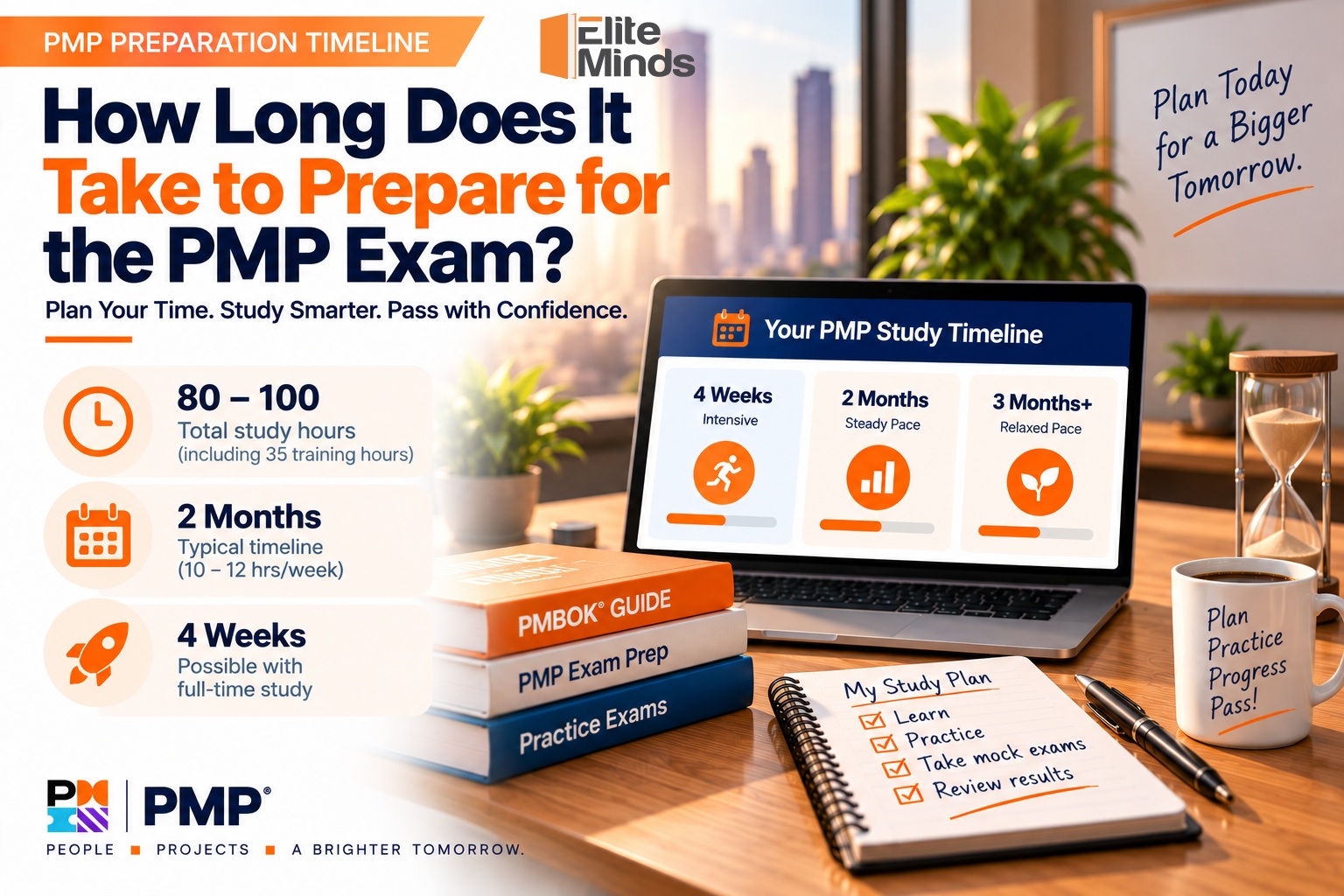
Follow a plan. Steady weekly study works better than long, irregular sessions. Our PMP study plan gives you a 30, 60, or 90-day schedule, and our guide to how long it takes to prepare helps you estimate your own timeline.
Signs you are ready
- You score about 80% or more on full, timed practice exams, more than once.
- You finish all 180 questions within 240 minutes without rushing at the end.
- Your weakest domain no longer pulls your overall score down by much.
- You can explain why an answer is right, not only choose it.
Your next step
The fastest way to know how hard the exam will be for you is to try it. Take our free PMP practice test: 180 questions, timed like the real exam, with feedback on your performance. Your results will show you where to focus.
For structured preparation with the 35 training hours and eight full mock exams, see our PMP Exam Preparation Course.
Frequently asked questions
Yes, for most candidates. It is long, and almost every question asks you to choose the best action in a project situation. With current material and timed practice, it is very manageable.
For most people, it is choosing between two reasonable answers and keeping focus for four hours. For candidates with little strategy or compliance experience, the Business Environment domain is also a challenge.
Yes, and it is not designed for them. The PMP requires 24 to 60 months of project experience.
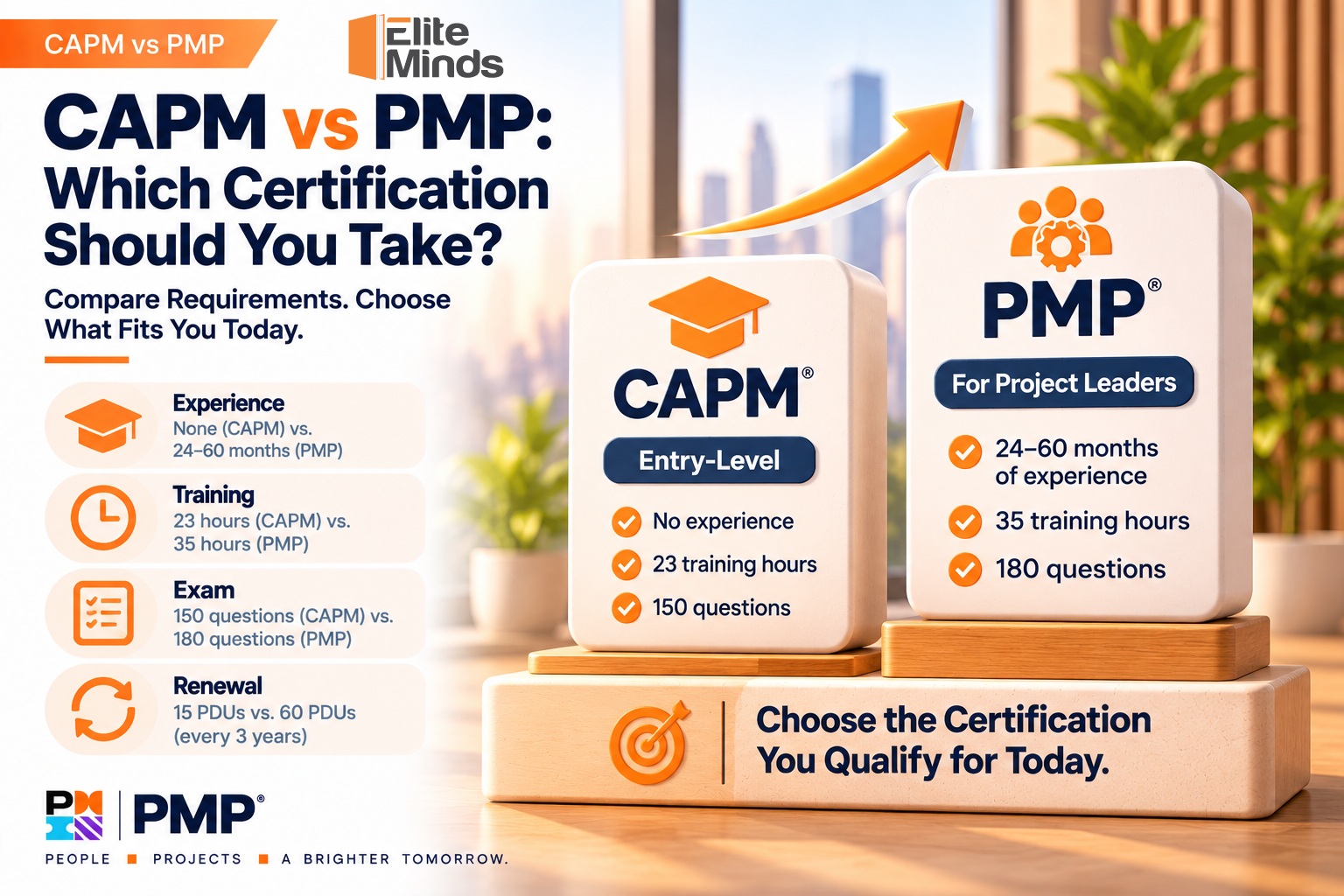
Yes. The CAPM mainly tests knowledge of concepts. The PMP tests judgment in realistic situations and is longer. See our CAPM vs PMP guide.
Yes. Many candidates do. The ones who succeed usually study from current material, practice full timed exams, and wait until they score about 80% before booking.
It is different rather than simply harder. Business Environment carries more weight, and case study sets and dashboard questions were added, but the time also increased to 240 minutes.
Most candidates need about 80 to 100 hours in total, including the 35 training hours.