Earning the Project Management Professional (PMP) certification is a major achievement, and passing on your first attempt is realistic with the right approach and tools. The exam rewards applied judgment across real project management scenarios, not memorized facts. After coaching thousands of candidates through it over the last ten years, here are five PMP exam tips that consistently make the difference.
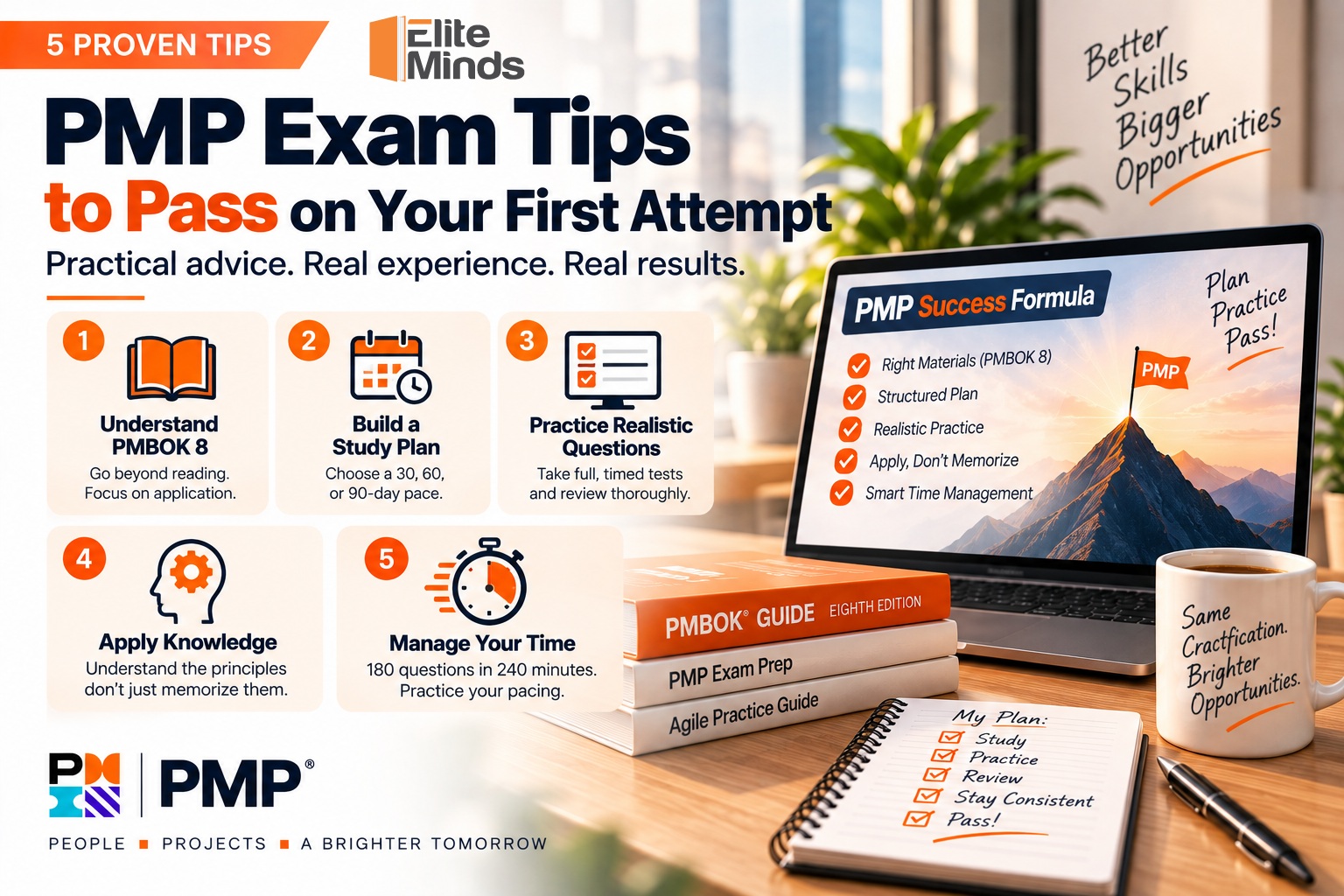
1. Understand PMBOK 8, do not just read it
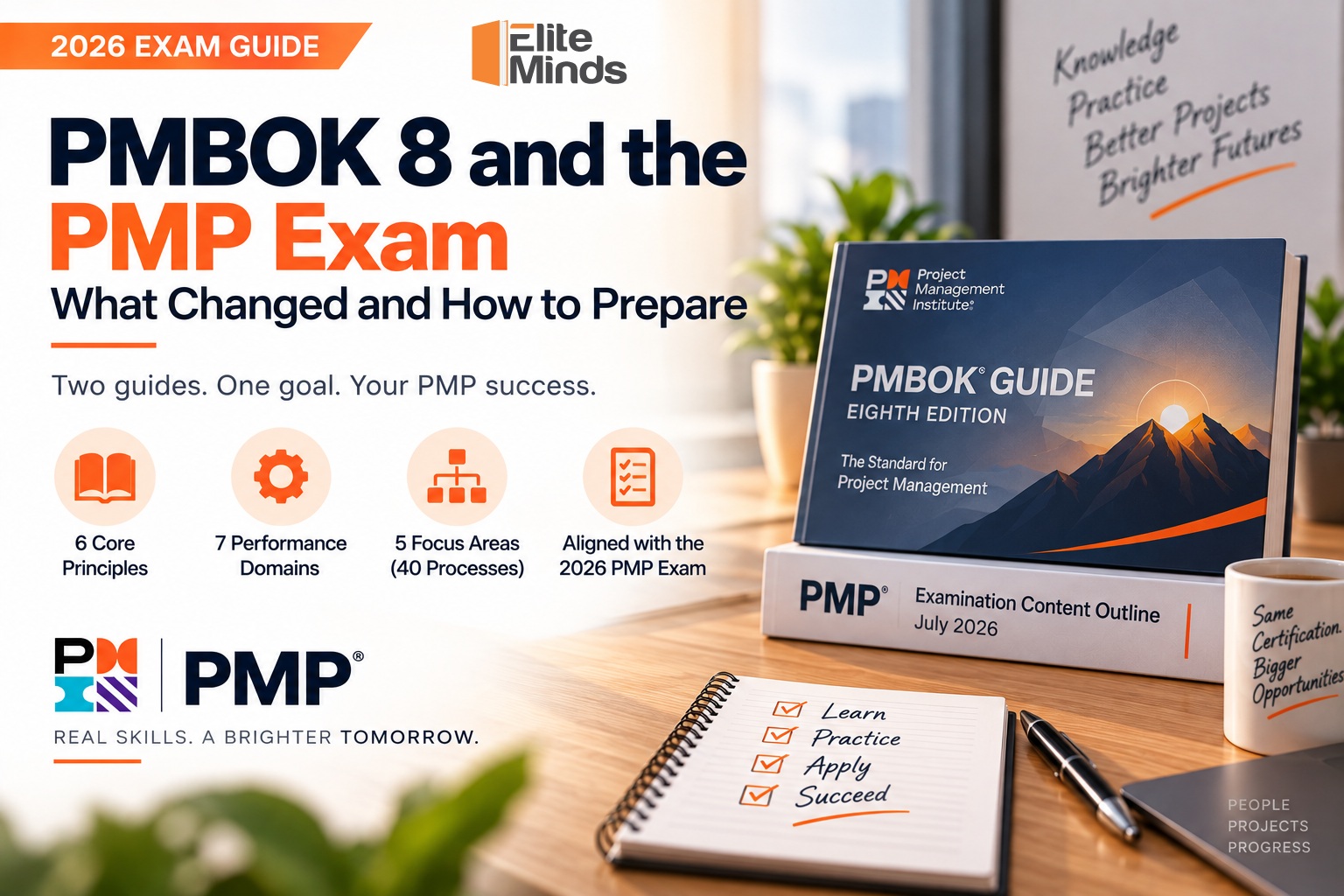
The most important PMP exam preparation tip is to work from the right reference. The 2026 exam is aligned with the PMBOK Guide, Eighth Edition, so make sure your main source is PMBOK 8 rather than an older edition. PMBOK 8 organizes project management around six actionable principles, seven performance domains, and five focus areas that hold 40 practical processes. Read for understanding, take notes on how the concepts connect, and focus on how you would apply each one in a scenario rather than reciting it. For a full breakdown of what to study, see our PMP syllabus overview.
2. Build a structured study plan
A clear plan is the difference between steady progress and drifting. Set target dates, leave time for review and practice questions, and match the pace to the hours you can give each week. The most common question I hear from candidates is simply where to start. One of the best tips to pass the PMP exam in the first attempt is to follow a plan built from real experience. Our PMP study plan lays out a step-by-step method you can run at a 30, 60, or 90-day pace depending on your schedule.
3. Practice plenty of realistic questions
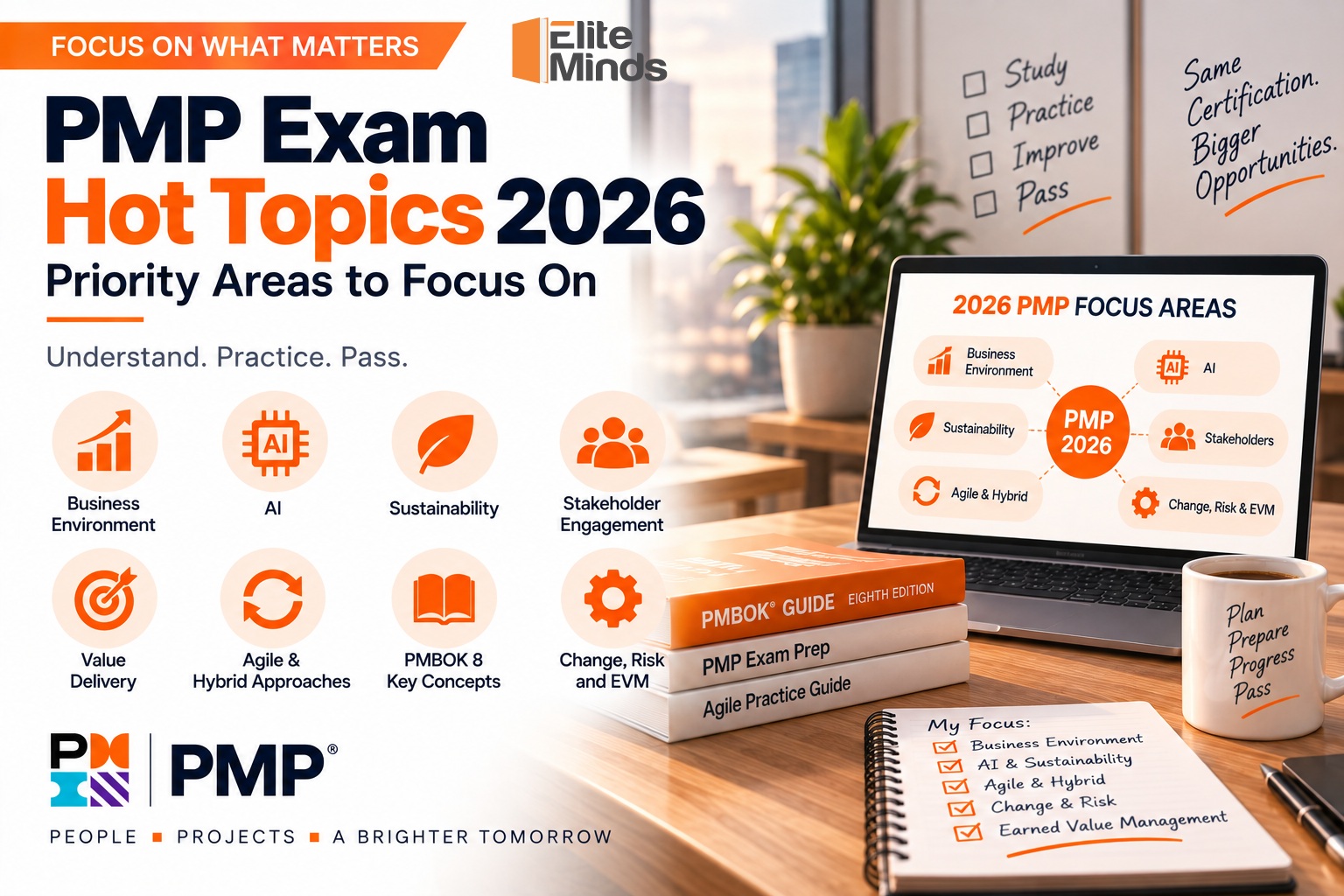
Working through high quality practice questions is one of the best tips for passing the PMP exam from the first attempt, as long as they reflect the current exam. Take full, timed tests, and for every question understand why the right answer is right and why the others are wrong. Our PMP exam simulator includes eight full-length tests of 180 questions, each timed to 240 minutes (4 hours) to match the real exam, for 1,440 practice questions in total. They are considering heavily the newly introduced exam topics such as AI in project management, sustainability, data driven project management, dashboards, and compliance.
Most exam questions are situational, asking what you should do first or next, and many are long and wordy, so practice reading dense scenarios under time pressure. Sit in a quiet room with a simple calculator and scratch paper, your phone off, and aim to finish all 180 questions within the limit while scoring at least 80%. When you can do that consistently, you are ready to schedule. You can also prepare the structured way through our PMP exam prep course.
4. Apply knowledge, do not just memorize
When candidates ask me for PMP certification exam tips, my number one answer is to understand the principles rather than memorize them. The exam is designed to test whether you can apply project management thinking to a situation, not whether you can recite definitions. Spend your time understanding the underlying concepts and how they play out in different scenarios, and work through case studies to build the critical thinking the exam rewards.
5. Manage your time during the exam
Time management matters, because you have 180 questions to answer in 240 minutes, which works out to roughly 80 seconds per question. Practice with timed mock exams so the pace feels natural, learn to spot the key detail in a long question quickly, and get comfortable eliminating wrong answer choices. Flag anything you are unsure of to revisit later, but remember you can only return to it within the same section, since you cannot go back once a break has started. The only thing that will help you manage your time during the exam is practicing high quality timely tested mock exams.
Conclusion
These five PMP exam tips come down to the same idea: prepare with current materials, practice applied judgment under realistic conditions, and manage your time well. With a structured plan and consistent practice, passing on your first attempt is well within reach. For a complete, guided path, see our PMP exam preperation course. Good luck with your PMP journey.
Frequently asked questions
Work from a current, PMBOK 8-aligned resource, build a structured study plan, and practice full, timed questions until you consistently score around 80%.
Focus on applying concepts rather than memorizing them, practice realistic situational questions under time pressure, and manage your pacing across the 240-minute exam.
240 minutes (4 hours) for 180 questions, with two 10-minute breaks.
The PMBOK Guide, Eighth Edition, which the current exam is aligned to.
Aim to score at least 80% consistently on full, timed 180-question tests before you schedule the real exam.