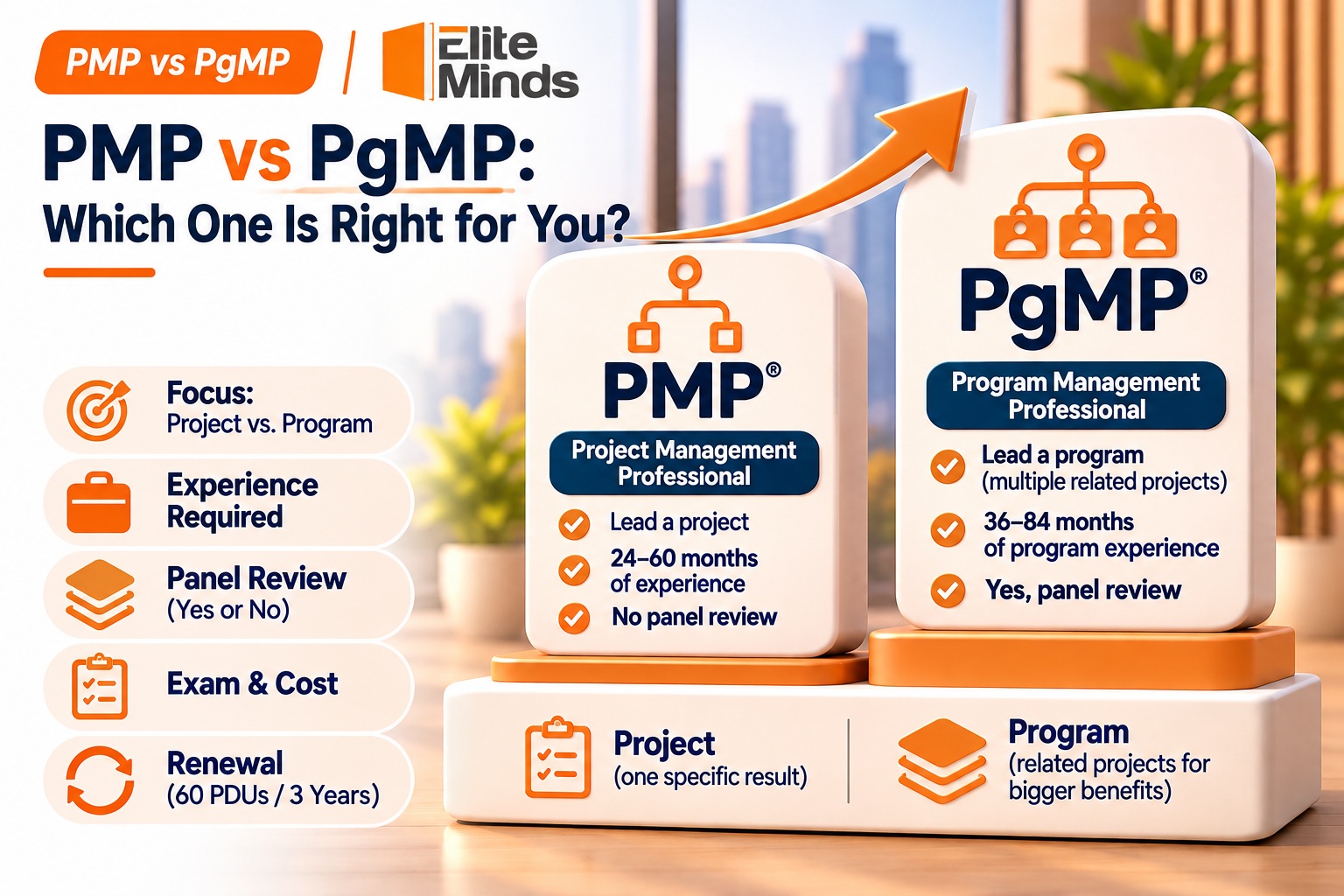
The PMP is for people who lead projects. The PgMP is for people who lead programs: groups of related projects managed together to deliver a bigger business benefit. Most professionals earn the PMP first and move to the PgMP years later, once they have real program experience. The PgMP needs far more experience, includes a panel review of your application, and costs more, so it is not a starting point.
I hold both credentials. I earned the PMP in 2016 and the PgMP in 2022, after years of moving from single projects to programs in construction, consulting, and corporate strategy. This guide explains the difference in plain terms and helps you decide which one fits where you are today.
The difference between PMP and PgMP: project vs program
A project delivers one specific result, such as a new building, a new system, or a product launch. It has a clear start, end, and scope.
A program is a group of related projects and activities managed together, because together they deliver a benefit that none of them could deliver alone.
A simple example: building a new hospital is a project. A national plan to improve healthcare access, which includes building several hospitals, hiring and training staff, launching a booking system, and changing patient processes, is a program.
The project manager asks: are we delivering this project on scope, time, and budget? The program manager asks: are all these projects, together, delivering the benefits the organization needs, and should we change course?
PMP vs PgMP at a glance
| PMP | PgMP | |
|---|---|---|
| Full name | Project Management Professional | Program Management Professional |
| Focus | Leading a project to deliver its result | Leading several related projects to deliver business benefits |
| Typical roles | Project manager, senior project manager | Program manager, PMO director, portfolio or transformation lead |
| Experience needed | 24 to 60 months leading projects, in the last 10 years | Project experience (or a PMP) plus 36 to 84 months of program experience, in the last 15 years |
| Panel review | No | Yes, before you can sit the exam |
| Exam | 180 questions in 240 minutes | 170 questions in 240 minutes |
| Exam fee (US) | $445 member / $675 non-member | $800 member / $1,000 non-member |
| Renewal | 60 PDUs every 3 years | 60 PDUs every 3 years |
Eligibility compared
PMP: you need between 24 and 60 months of experience leading projects within the last 10 years, depending on your education, plus 35 hours of project management training. Our PMP Eligibility Requirements guide lists every route.
PgMP: you need both project experience and program experience, all within the last 15 years.
| Education | Project experience | Program experience |
|---|---|---|
| Secondary diploma | 48 months, or an active PMP | 84 months |
| Bachelor's degree or higher | 48 months, or an active PMP | 48 months |
| Degree from a GAC-accredited program | 36 months, or an active PMP | 36 months |
The key point: a PMP can replace the project experience, but it does not replace the program experience. You still need years of real program work.
What counts as program experience? Leading several related projects together, managing how they depend on each other, tracking the shared benefits, and reporting to senior leaders or a governance board. Managing one large project, even a very large one, is still project experience.
The panel review
This is the step that surprises most PgMP candidates. After you apply and pay, a panel of PgMP holders reads the descriptions of your program experience and decides whether it really is program management. Only after the panel approves you can you schedule the exam.
If the panel does not approve your submission, PMI explains the options for revising it. Check the current rules in PMI's PgMP Handbook. Writing a clear, specific application is therefore a big part of PgMP preparation.
The PMP has no panel review. PMI checks your application, and some applications are audited, but nobody judges the quality of your experience descriptions in the same way.
The exams compared
| PMP | PgMP | |
|---|---|---|
| Questions | 180 (170 scored, 10 unscored) | 170 (150 scored, 20 unscored) |
| Time | 240 minutes | 240 minutes |
| Breaks | Two optional 10-minute breaks | Check PMI's current break policy |
| Domains | People, Process, Business Environment | Strategic Alignment, Program Lifecycle, Benefits Management, Stakeholder Engagement, Governance |
| Main reference | PMBOK Guide, Eighth Edition | The Standard for Program Management |
The PgMP exam domains and their weights are:
- Program Lifecycle (44%)
- Stakeholder Engagement (16%)
- Strategic Alignment (15%)
- Governance (14%)
- Benefits Management (11%)
Both exams are scenario-based, but the PgMP scenarios are written at a higher level. Instead of a risk on one project, a PgMP question may describe conflicting benefits between two component projects, or a change in strategy that affects the whole program.
For the PMP exam structure in detail, see our PMP Exam Format guide.
Cost compared
| Fee (US) | PMP | PgMP |
|---|---|---|
| Exam, PMI member | $445 | $800 |
| Exam, non-member | $675 | $1,000 |
PMI membership lowers both fees. For the full PMP budget, see our PMP Exam Cost guide.
Renewal
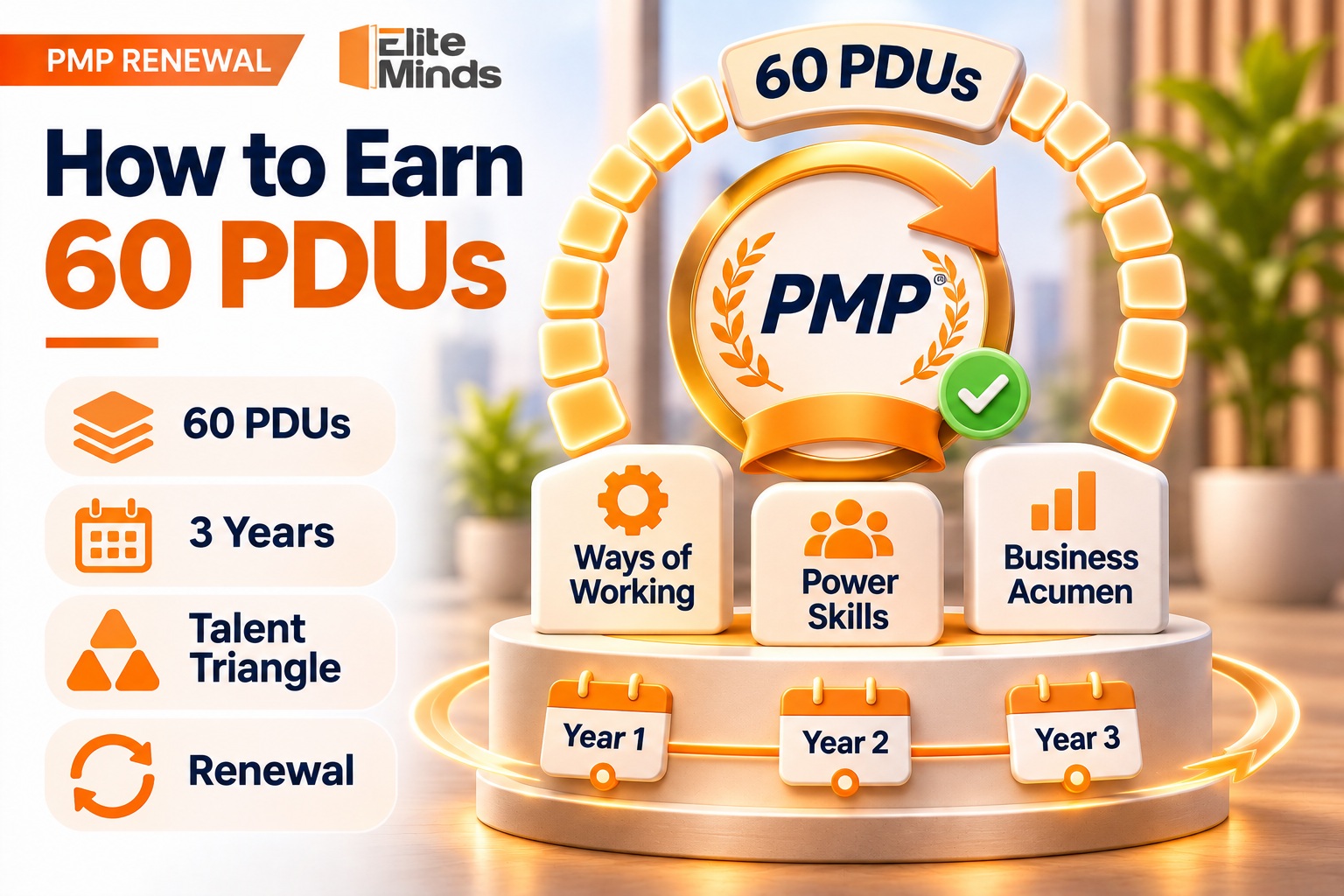
Both certifications are valid for three years and need 60 PDUs to renew. If you hold both, the same learning can count toward both cycles, which makes keeping them easier than many people expect.
Career value
The PMP is the most widely requested project management certification. It is often listed as required or preferred for project manager roles across industries, and it is the credential most hiring managers recognize.
In the PgMP vs PMP comparison, the PgMP is much rarer. Far fewer people hold it, so it stands out for senior roles such as program manager, PMO director, transformation lead, or roles that manage large government or enterprise programs. In my experience, it matters most in organizations that run large, multi-year initiatives, such as government programs, giga-projects, and major transformation work.
PMP or PgMP: which should you take first?
For almost everyone, the answer is the PMP.
| Your situation | Recommendation |
|---|---|
| You lead projects and do not yet have years of program experience | PMP |
| You lead projects and hope to move into program roles | PMP now, PgMP later |
| You already hold the PMP and have led programs for 4+ years | PgMP |
| You manage programs but never took the PMP | PgMP is possible, but you need 48 months of project experience instead |
| You are new to project management | Neither yet. Start with the CAPM |
Why PMP first? It is easier to qualify for, it is recognized by more employers, it builds the project foundation that program questions assume, and it replaces the project-experience requirement when you apply for the PgMP later.
Ask yourself one honest question before choosing the PgMP: in my current role, do I coordinate several related projects and answer for the benefits they deliver together? If the answer is no, the panel review will be very difficult, whatever your job title says.
If you are earlier in your career, our CAPM vs PMP guide helps you choose your first step.
Moving from PMP to PgMP
This is the path we recommend to most of our students:
- Earn the PMP and keep it active.
- Look for program-level work. Volunteer to coordinate several related projects, manage shared resources and dependencies, and own the benefits reporting.
- Record your program experience as you go. Note the program, its component projects, the benefits targeted, your role, and the decisions you made. This makes the panel review application much easier to write.
- Apply when you meet the program-experience requirement. Your active PMP covers the project-experience part.
- Prepare for the panel review and the exam together. Study The Standard for Program Management and practice program-level scenario questions.
Your next step
If you are not yet PMP certified, start there. Our PMP Exam Preparation Course includes the 35 training hours, eight full mock exams, and help with your application.
If you already hold the PMP and lead programs, our PgMP Exam Prep Course covers the five program domains and includes three full 170-question PgMP practice exams. Help with drafting your application is available in the Plus Application Support package.
Frequently asked questions
Yes. It needs much more experience, includes a panel review of your application, and its exam questions are written at program level. Fewer people attempt it, and fewer hold it.
No, the PMP is not required. But an active PMP replaces the project experience requirement, so most candidates earn it first.
Yes, if you now lead several related projects and own their combined benefits. If you still manage single projects, build program experience first.
No. Every route needs between 36 and 84 months of program management experience within the last 15 years.
A review by PgMP holders of the program experience you describe in your application. You can only sit the exam once the panel approves it.
PgMP holders usually work in more senior roles, so their pay tends to be higher. But the role and the industry affect salary more than the certificate itself.
Yes. Many program managers keep both, and both renew with 60 PDUs every three years.