Preparing for the 2026 PMP exam is not just about covering the syllabus. It is about understanding which areas deserve focused attention and how they connect to real project management scenarios. This guide highlights the key PMP exam topics to prioritize in your preparation, from Business Environment, AI, sustainability, and value delivery to agile and hybrid approaches, risk, change control, and earned value management.
This is a focus guide, not a replacement for the PMP syllabus or a prediction of how many questions will appear on any specific topic. PMI does not publish per-topic question counts. Instead, each section explains what the topic is, why it matters for the 2026 exam, and what to focus on, with links to dedicated guides for deeper study.
The July 2026 PMP exam is organized across People (33%), Process (41%), and Business Environment (26%), with approximately 60% of exam content reflecting adaptive, agile, and hybrid approaches and 40% predictive approaches. Use this guide to understand the areas emphasized in the current exam outline, then follow the linked resources to build deeper knowledge and practice applying it in realistic scenarios.
The 2026 emphasis areas
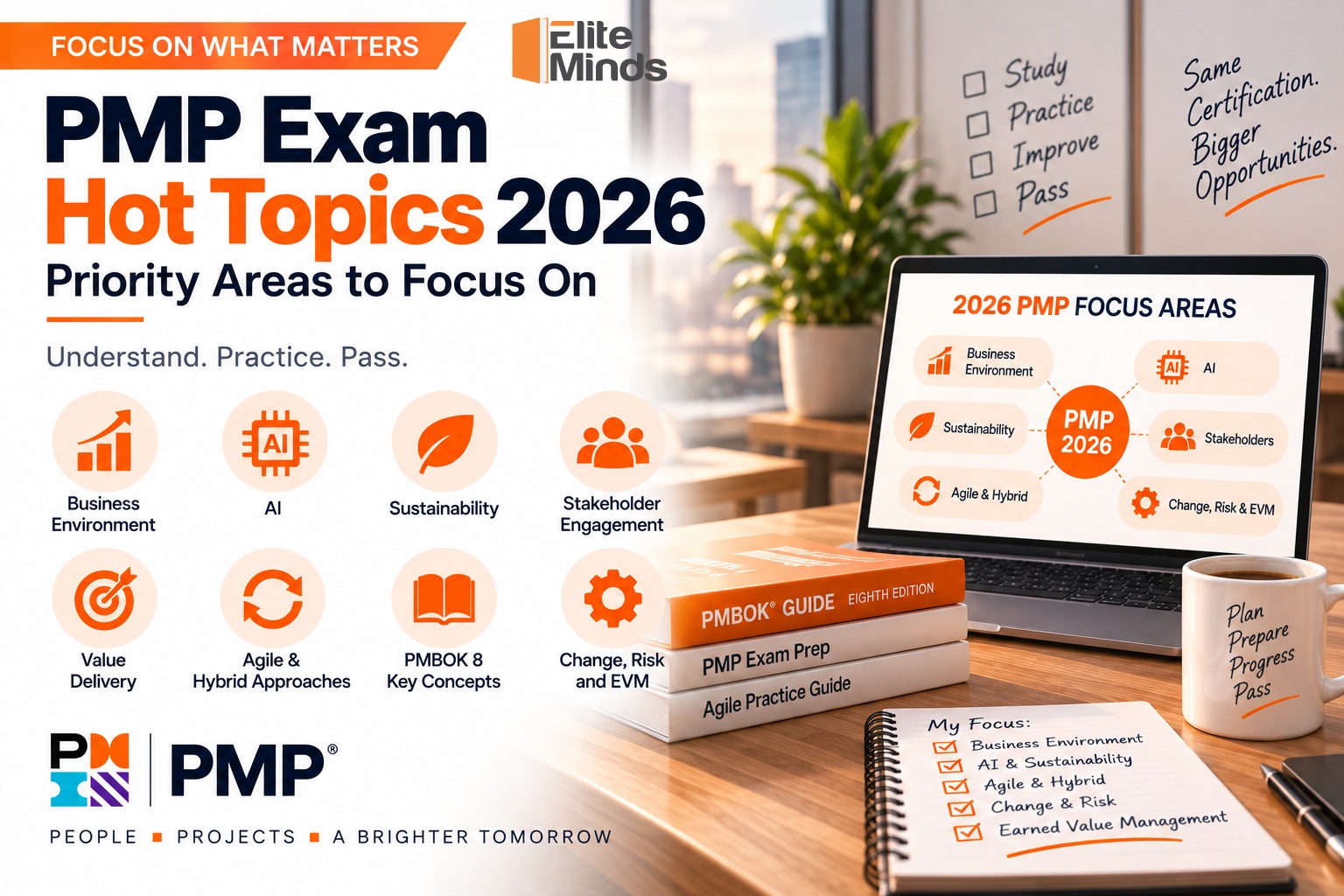
The update reshaped which areas deserve attention. These changed most or are newly emphasized under the 2026 outline.
Business Environment. The domain connecting the project to organizational strategy, governance, compliance, and value. It matters because it grew the most in 2026, from 8% to 26% of the exam. Focus on reading a scenario for the business outcome and the organizational context, not only the schedule and budget. See our ECO 2026 guide.
AI. Artificial intelligence incorporated into project scenarios as part of how project managers now work. It matters because the 2026 update reflects AI's growing role in project environments. Focus on responsible use: keeping a human accountable for decisions, verifying AI output, applying it appropriately, and protecting confidential data. You are not expected to know specific products or technical AI. See our AI Topics guide.
Sustainability. Environmental and social impact treated as part of project delivery. It matters because sustainability appears within the outline as a requirement, a quality and compliance consideration, and a risk. Focus on weighing environmental and social impact alongside cost, schedule, and scope. See our Sustainability Questions guide.
Stakeholder engagement. Identifying, understanding, and actively engaging the people a project affects. It matters because it sits at the heart of the People domain and carries more emphasis in 2026, including leading distributed and AI-augmented teams. Focus on proactive, continuous engagement, tailoring communication, managing expectations, and building trust.
Value delivery and business outcomes. Judging a project by the outcome it delivers, not only by on-time, on-budget completion. It matters because the 2026 exam tests business-outcome thinking more directly. Focus on the trade-offs between scope, cost, and the value the organization actually needs.
Agile and hybrid approaches. Adaptive, iterative, and blended ways of working. They matter because about 60% of the exam reflects agile and hybrid approaches, distributed across all three domains. Focus on when to adapt, tailor, and blend approaches rather than defaulting to predictive thinking. See our PMP Syllabus 2026 guide.
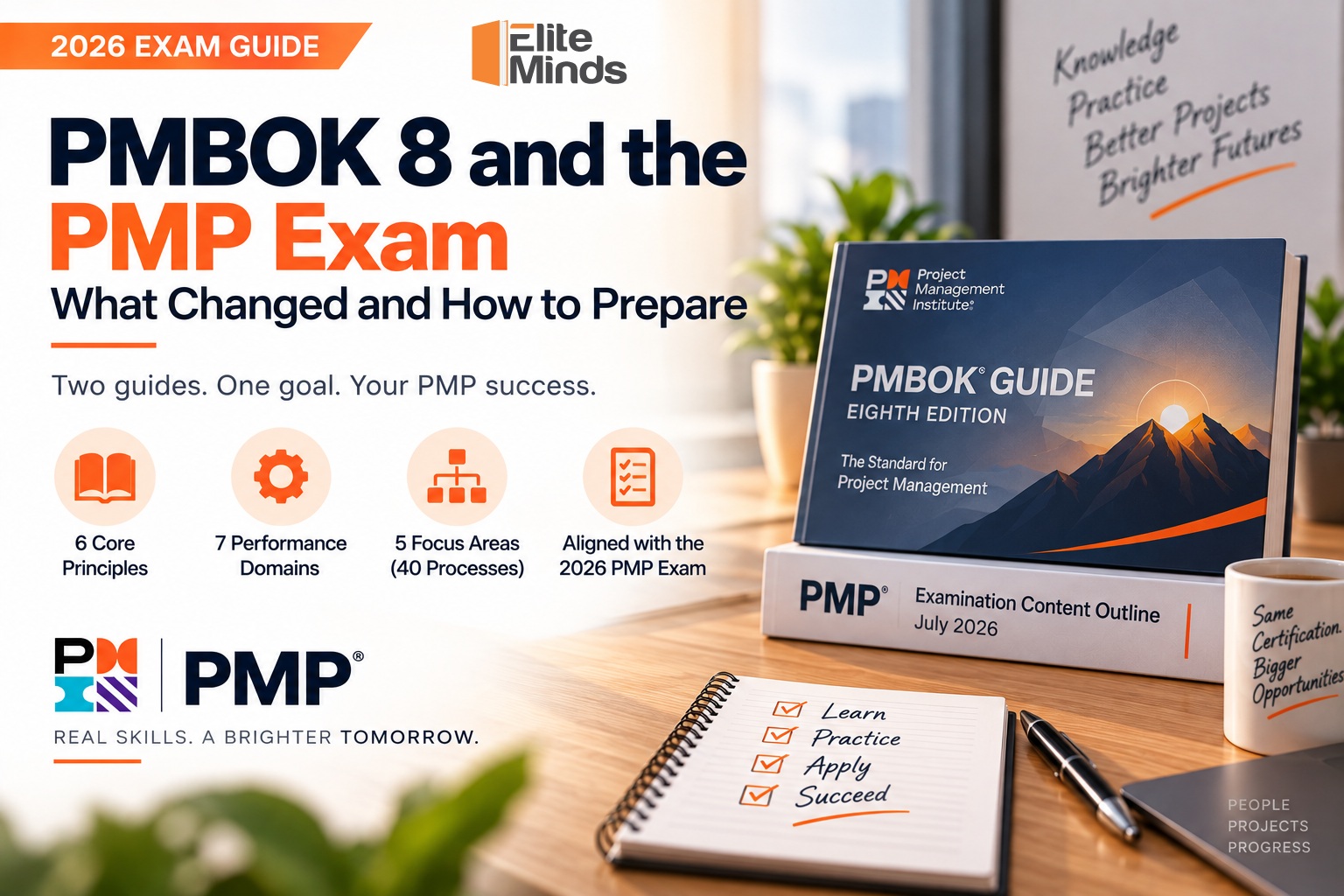
PMBOK Guide, Eighth Edition. The reference the 2026 exam is aligned to. It matters because PMBOK 8 reframes project management around six principles and seven performance domains, with renewed emphasis on value delivery, adaptability, accountability, sustainability, AI, and tailoring. Focus on understanding the principles and performance domains well enough to apply them in scenarios, rather than memorizing structure. See our PMBOK 8 and the PMP Exam guide.
Perennial high-value areas
Integrated change control. The formal process for evaluating and deciding on change requests in predictive enviroments. It matters because it is a classic, high-frequency scenario type. Focus on the correct sequence, which is to evaluate the impact, document a formal change request, run it through integrated change control, update the change log, then replan and communicate, and on knowing when the project manager can decide versus when the change control board must approve.
Risk response strategies. The planned responses to threats and opportunities. They matter because risk runs throughout the exam. Focus on the five threat responses (avoid, mitigate, transfer, accept, escalate) and the five opportunity responses (exploit, enhance, share, accept, escalate), and on matching the right one to the scenario.
Estimation techniques. Methods for estimating cost, duration, and resources. They matter because they are frequently tested, sometimes with light math. Focus on analogous estimating (top-down, from history and expert judgment), parametric estimating (from statistical relationships), three-point estimating (optimistic, most likely, and pessimistic), and bottom up estimation (most accurate but expensive to obtain) and on choosing the right one for the situation.
Earned value management. A technique that compares planned value, earned value, and actual cost to measure performance. It matters because it is a reliable source of questions, including simple calculations. Focus on what the cost and schedule performance indexes tell you and how to forecast completion, rather than on rote formulas.
Reserves. Time or cost set aside for risk. They matter because candidates often confuse the two types. Focus on the difference between contingency reserves (for known risks, inside the cost baseline, managed by the project manager) and management reserves (for unknown risks, outside the baseline, needing management approval).
Contract types and risk. The main contract families used in procurement. They matter because scenarios test who carries the risk. Focus on fixed-price (the seller carries most of it), cost-reimbursable (the buyer carries more), and time-and-material (shared), and on reasoning about risk from the contract type.
Agile Release and iteration planning. Release Management is about dealing with development, testing, deployment and support of software releases to the end user. In the new era of continuous delivery (CD), organizations have become increasingly lean and agile while managing this process. Release management is always managing, planning, scheduling, and controlling software delivery throughout the release lifecycle. Iterative Development is a way of breaking down the software development of a large application into smaller chunks.
Agile execution tools. The tools and artifacts agile teams use day to day. They matter because, with 60% of the exam agile and hybrid, they appear often. Focus on Scrum roles, events, and artifacts, plus velocity, burndown charts, user stories and story points, self-organizing teams, and information radiators, and on what each one tells a team.
Organization structure and PM authority. How a company is organized and how that shapes the project manager's authority. It matters because scenarios test how much authority the project manager holds. Focus on the pattern: limited authority in functional and weak-matrix organizations, shared in a balanced matrix, higher in a strong matrix, and highest in a projectized organization, where the team reports to the project manager. PMBOK 8 de-emphasizes the old labels, but the authority idea still appears.
Project, program, and portfolio. Three levels of managing work. They matter because telling them apart is a quick win. Focus on the distinction: a project delivers a unique result, a program coordinates related projects for benefits not available separately, and a portfolio groups projects and programs to meet a strategic goal.
Risk allocation in contracts. A typical question in the PMP exam would present a procurement scenario, the scenario would provide some details about the contract the project manager is using, and the question would then ask who has more risk in the described scenario – the buyer or the Seller. You will have to first understand which type of contract is being described in the situation and then answer the question accordingly.
Scrum Framework. Scrum is a framework that helps teams work together. Much like a rugby team (where it gets its name) training for the big game, scrum encourages teams to learn through experiences, self-organize while working on a problem, and reflect on their wins and losses to continuously improve. For the exam, you should be aware of the Scrum roles, events, and artifacts.
Self-organizing team concept. At the simplest level, a self-organizing team is one that does not depend on or wait for a manager to assign work. Instead, these teams find their own work and manage the associated responsibilities and timelines. Of course, there's more to self-organizing teams than simply finding and completing work. Self-organizing teams also take on the responsibility of choosing the most effective and efficient way to complete their work and regularly look for ways to improve through experimentation.
How to use these topics in your prep
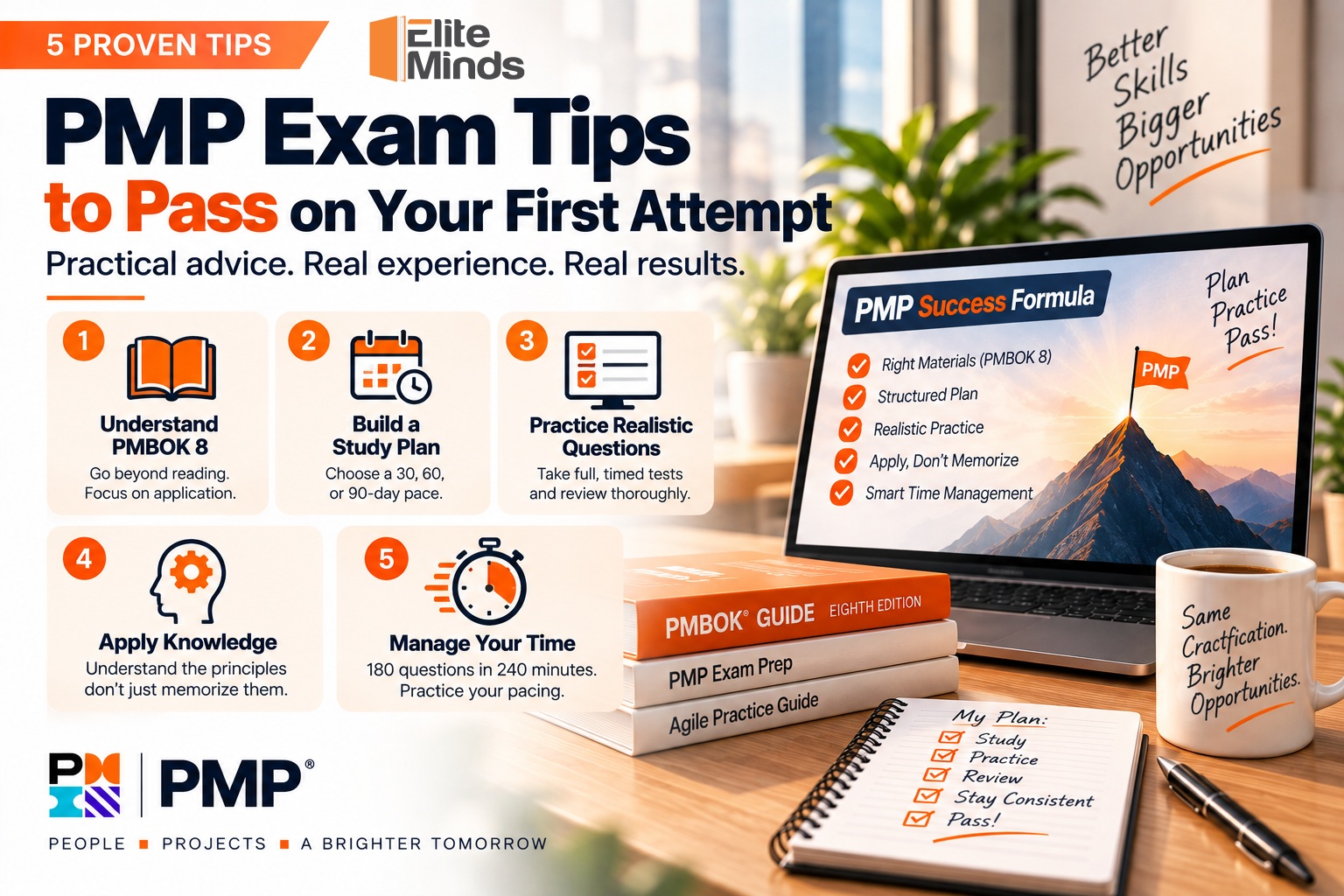
Treat this as a priority list, not a complete study source. Use it to decide where to spend your time, then learn each area in depth through the owner page and pressure-test yourself with realistic questions. Build your schedule with our PMP study plan, learn the full content through our PMP syllabus overview, and practice with our Free PMP exam simulator. For structured, guided preparation, see our PMP exam prep course.
Frequently asked questions
Process, at 41%. People is 33% and Business Environment is 26%. Business Environment grew the most, up from 8% in the previous exam, but Process remains the largest single domain.
Business Environment, AI, sustainability, stakeholder engagement, value delivery, and agile and hybrid approaches, alongside perennial areas such as change control, risk responses, estimation, and earned value management.
No. PMI does not publish per-topic question counts, so treat any specific number you see with caution. Study by domain weighting instead.
About 60% of the questions reflect adaptive, agile, and hybrid approaches, with the remaining 40% predictive, distributed across all three domains.